.svg)



A chat with Cuba...
Portuguese DJ and producer Cuba is quickly becoming one of the standout names emerging from Portugal’s underground electronic scene. Originally from Porto and now based in Lisbon, his sound blends rolling house grooves, tribal percussion, subtle basslines, and hypnotic tension into a style that feels equally built for intimate clubs and peak-time dancefloors.
His latest release, Thursday Rumba EP, arriving via SMIILE Records — the label founded by Chloé Caillet — captures that energy across four rhythm-driven tracks designed to move both body and mind. With support already coming from names like Peggy Gou, Chris Stussy, Jamie Jones and Enzo Siragusa, Cuba is steadily positioning himself among the new wave of artists pushing Portugal further onto the global electronic music map.
Following the EP release, we spoke with him about the inspiration behind Thursday Rumba, his creative process, club culture, and the evolution of his sound.
Thursday Rumba EP feels very rhythm-focused and atmospheric. What was the main idea or emotion you wanted to capture with this release?
I wanted to capture movement more than a specific emotion. Most of the tracks were built around the idea of creating tension through rhythm and then releasing it in a way that feels natural on a dancefloor. I've always been drawn to music that doesn't reveal everything immediately, so the EP is full of small details, percussion layers and subtle changes that hopefully keep people engaged over time. The goal was to make records that work in a club but still have enough personality to stand on their own.
The press release mentions “turning tension into motion.” How do you approach building tension and release in your productions?
For me, tension doesn't necessarily come from huge breakdowns or obvious drops. It usually comes from repetition, groove and expectation. I like introducing elements slowly and letting them evolve over time until they create a certain pressure. Then it's about finding the right moment to release that energy, sometimes with something very simple. A new percussion loop or a bass variation can be more effective than a massive drop if it's done at the right moment.
Each track on the EP has its own identity. Which track best represents where you are creatively right now, and why?
Probably Thursday Rumba. It feels like the most complete reflection of what I'm trying to do at the moment. It has the tribal influences, the rolling groove and the tension-building elements that I naturally gravitate towards. It sits somewhere between underground club music and something more accessible, which is a balance I'm constantly exploring.
How did the connection with SMIILE Records first happen, and what made the label feel like the right home for this project?
I've been a fan of what Chloé and the SMIILE team have been building for a while. The label has a strong identity but also gives artists room to express themselves, which was important to me. When I met them during a festival in Porto, Chloé connected with the music and it felt very organic. The records weren't made specifically for the label, they already represented where I was creatively, so it felt like a natural fit from the beginning.
Your sound combines rolling house grooves with tribal percussion and subtle basslines. Which artists or scenes have influenced that sonic direction the most?
A lot of different scenes have influenced me over the years. The UK house scene has definitely played a big role, especially artists who focus heavily on groove and rhythm. At the same time, I've always been drawn to records with strong percussive elements and a certain warmth to them. More than specific artists, I'm inspired by DJs and producers who understand how to create movement with relatively simple ingredients
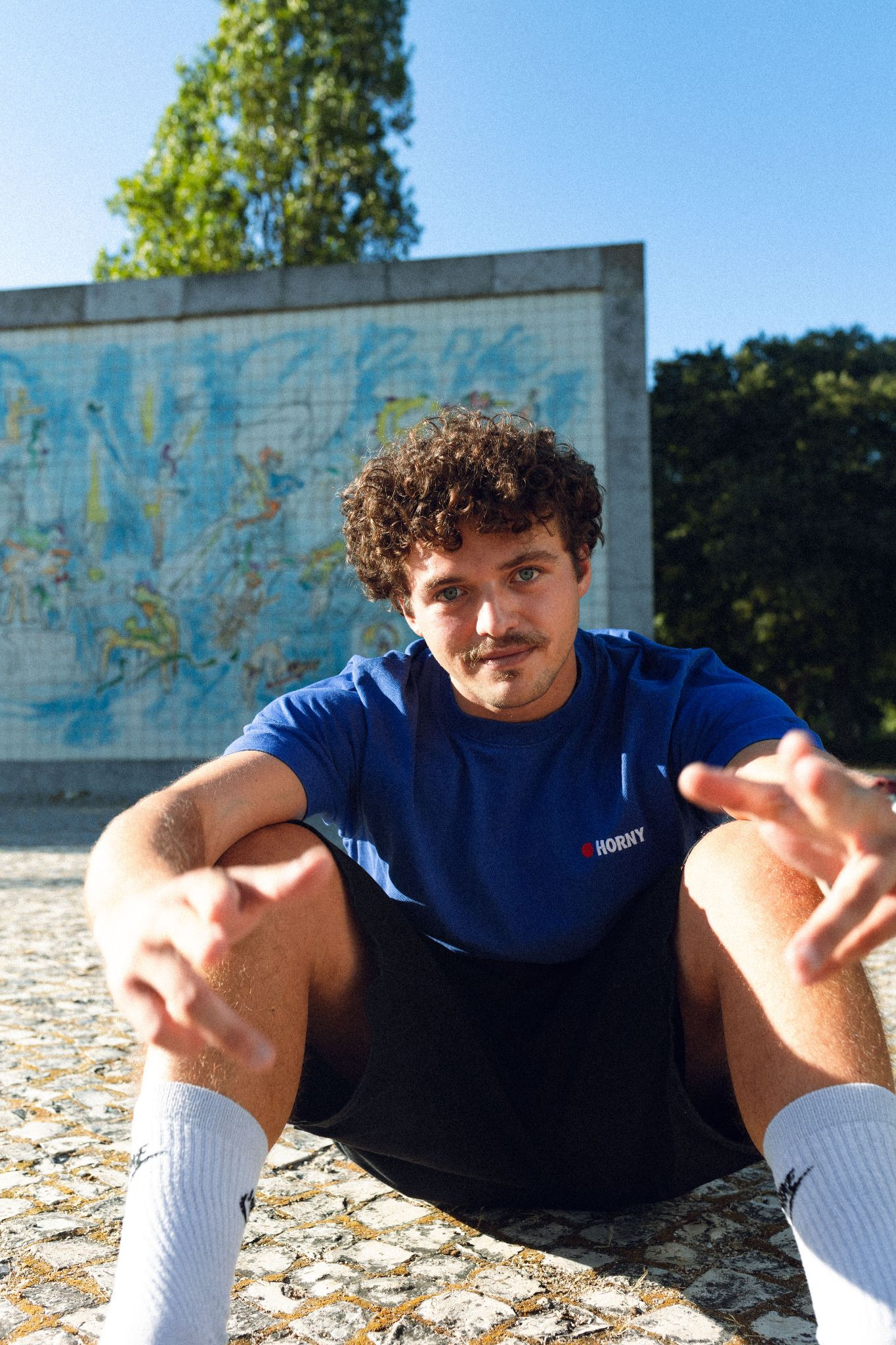
You’re now based in Lisbon — has the move changed your musical perspective or creative workflow in any way?
Definitely. Lisbon has exposed me to a much wider network of artists, promoters and opportunities. It's a very international city and there's a constant exchange of ideas happening. I still carry a lot of the mindset I developed in Porto, but Lisbon has encouraged me to think bigger.
Your tracks have already received support from major artists like Peggy Gou, DJ Tennis, Luke Alessi, The Trip. Do you remember the first time you heard one of your tracks being played by a bigger name?
I do. It's one of those moments that feels a bit surreal because you spend so much time working on music alone. Seeing artists you admire connect with something you've made is incredibly motivating. More than the exposure, it's the feeling of having your music resonating with people who you genuinely respect.
When you’re producing music, do you usually start with rhythm, groove, atmosphere, or something else entirely?
Almost always rhythm. The groove is usually the foundation of everything for me. Once that feels right, the rest of the track tends to reveal itself naturally. If the rhythm isn't working, it doesn't matter how good the sounds are. I spend a lot of time making sure the groove has the right energy before moving on to melodies or other elements.
Your DJ sets feel very narrative-driven. How important is storytelling to you when playing a club or festival set?
I don't really prepare my DJ sets that far in advance. To be honest, I enjoy putting them together a few hours before the gig. I like having a rough direction in mind, but I never want to be locked into a fixed plan. What I enjoy most is finding that balance between reacting to the room and still having control over where the night goes next. You're constantly making small decisions that shape the energy and direction of the set, and that's what makes every performance different.
Buy ‘Thursday Rumba EP’ HERE