.svg)


Back the culture or lose it: When governments support culture
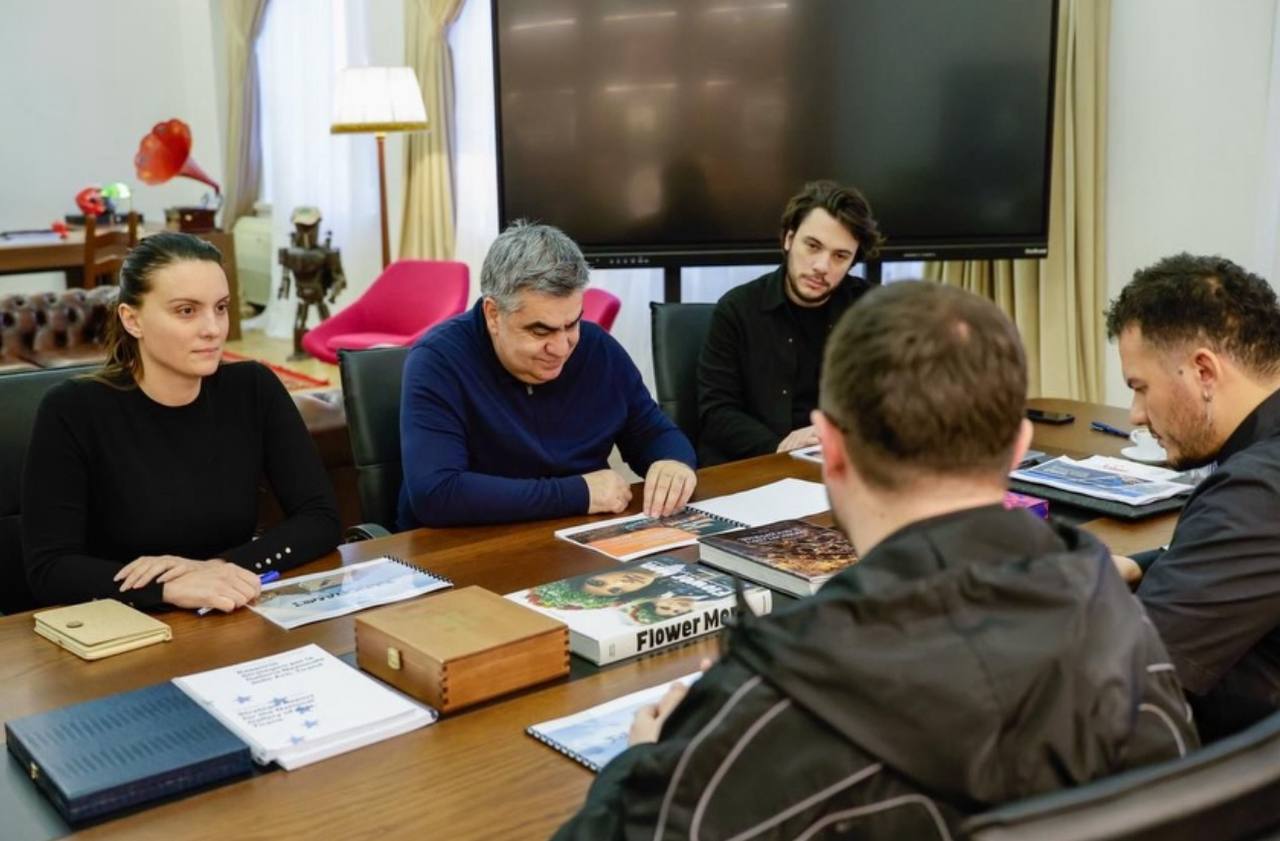
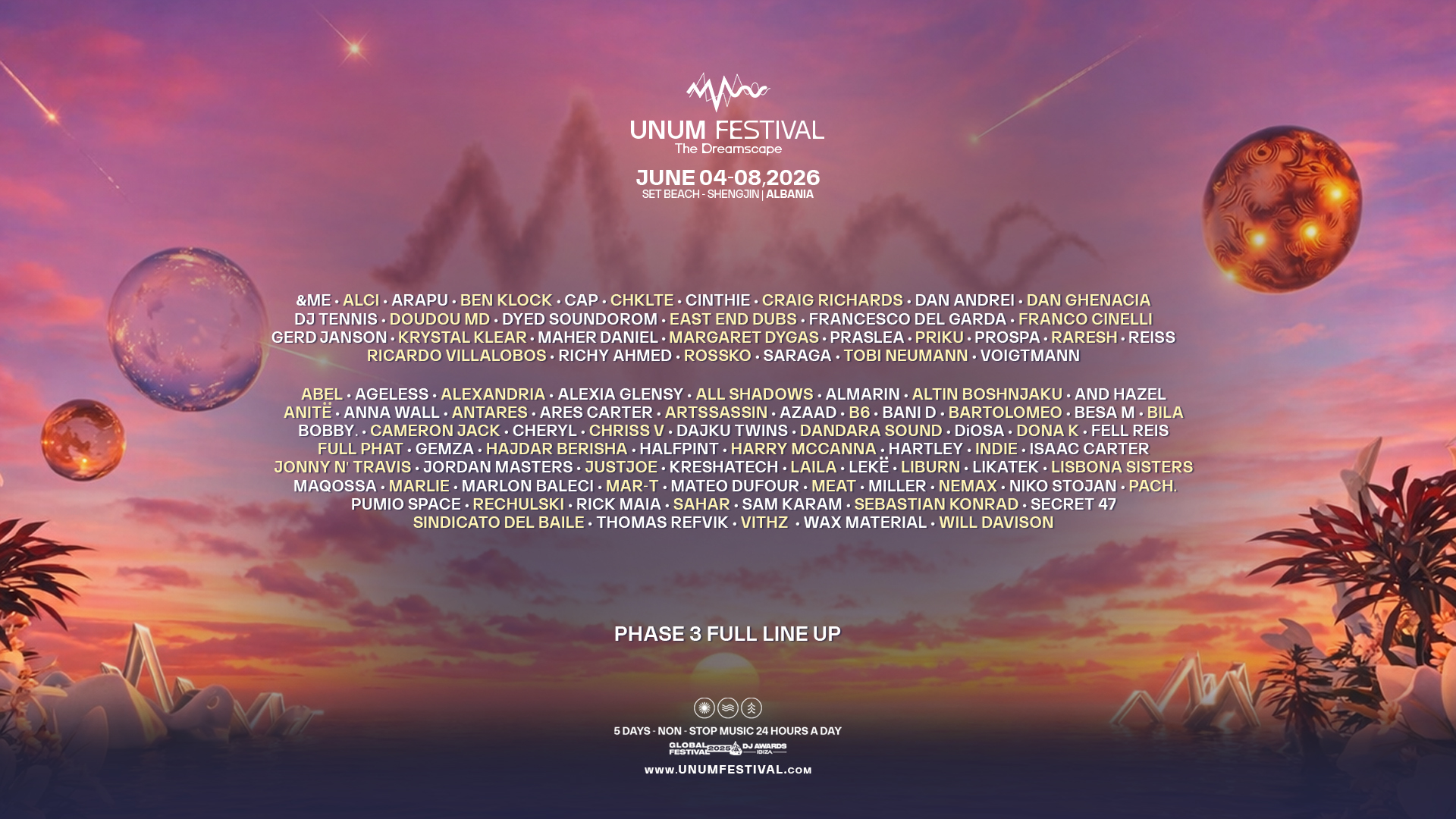
There’s a shift happening on the Adriatic, and it’s not about trends, it’s about attitude. In Albania, things are moving differently. UNUM Festival isn’t just another date on the calendar anymore; it’s become a symbol of what can happen when institutions actually get behind a scene instead of standing in its way. Backed by the Ministry of Tourism, Culture and Sport and supported by the Municipality of Lezhë, UNUM has grown into something much bigger than a festival. Winning ‘Best Global Festival 2025’ at the DJ Awards Ibiza only confirmed what a lot of people already knew, this is a project with real weight, and it’s being treated that way at a national level.
That kind of support matters. It means smoother processes, clearer communication, and a shared understanding that electronic music isn’t just nightlife, it’s culture, tourism, and serious economic output. UNUM has become the clearest proof that Albania is stepping onto the global festival map with intent, not accident. It’s a local initiative with international reach, and crucially, it’s being recognised as such by the people in charge.
The contrast with Romania right now couldn’t be sharper. Not long ago, the country was one of Eastern Europe’s strongest electronic music hotspots. Sunwaves, in particular, helped define that identity, a beachside institution where the scene could stretch out, experiment, and exist on its own terms. But that space has been shrinking, and not because the music lost its edge or the crowd disappeared. If anything, demand is still there. What’s changed is the environment around it.
Following the 2 Mai tragedy, authorities doubled down on enforcement at festivals, bringing in heavy police presence, increasing checks, and creating an atmosphere that felt more like control than care. Across the 2024 season, hundreds of interventions and hundreds of cases made headlines, but the tone of it all left a mark. For many, it didn’t feel like safety, it felt like pressure. The gap between the scene and the authorities only grew wider.
At the same time, organisers were dealing with something even harder to navigate, bureaucracy. The final blow for Sunwaves in Mamaia didn’t come from lack of interest, but from a breakdown in communication with institutions. Issues around permits, unclear requirements, and last-minute decisions made planning nearly impossible. A festival that reportedly brings in over €6 million to the local economy, and costs around €1 million to produce, was pushed into a position where continuing simply didn’t make sense anymore.
So it moved. Just across the border, to Golden Sands in Bulgaria, effectively the same coastline, just under a different system. Same crowd, same energy, new conditions. And that says a lot.
Because while Romania tightens up, others in the region are opening up. Bulgaria is a clear example, with promoters like Fest Team helping reshape how the country is seen on the global circuit. Their focus isn’t hype, it’s delivery, infrastructure, consistency, and long-term trust. That approach has already brought in major international names, but more importantly, it’s repositioning Southeast Europe as a viable, reliable touring route. As CEO Stefan Elenkov puts it, “Southeast Europe is no longer a geographical gap between Western European dates… when strong demand is combined with disciplined delivery, the territory becomes attractive.”
That mindset cuts to the core of why things are shifting. Markets don’t grow on sentiment, they grow on execution. Even if Bulgaria isn’t yet Tier-1 in size, it’s increasingly operating at that level in terms of delivery, and that’s what artists and teams respond to. When events sell tens of thousands of tickets efficiently and run without friction, the signal is clear. Add to that a growing focus on trust, transparency, and positioning festivals as full travel experiences, and you start to see the bigger picture, while some scenes are being squeezed, others are actively building the conditions for long-term growth.
And that’s what makes Albania’s approach stand out even more. With UNUM, the support isn’t passive, it’s active. Institutions are recognising the festival’s role in shaping the country’s cultural image and backing it accordingly. That kind of alignment removes friction. It allows organisers to focus on building experience instead of fighting systems. It creates an environment where safety can be approached through collaboration, not intimidation.
There’s a bigger conversation here about how electronic music culture is treated across Europe. Scenes don’t disappear overnight, but they can be slowly pushed out when the conditions become too difficult to operate in. And once they move, they don’t always come back. What’s happening between Albania, Romania, and Bulgaria right now is a clear example of that shift in real time.
UNUM shows what’s possible when there’s trust and recognition from the top. Sunwaves shows what can happen when that relationship breaks down. The region still has the crowd, the artists, and the energy, that hasn’t gone anywhere. The difference is how it’s being handled.
Because at the end of the day, electronic music will always find space. The real question is where it’s allowed to grow.