.svg)


Finding Freedom in a Digital World: DJ Sandwich Interview
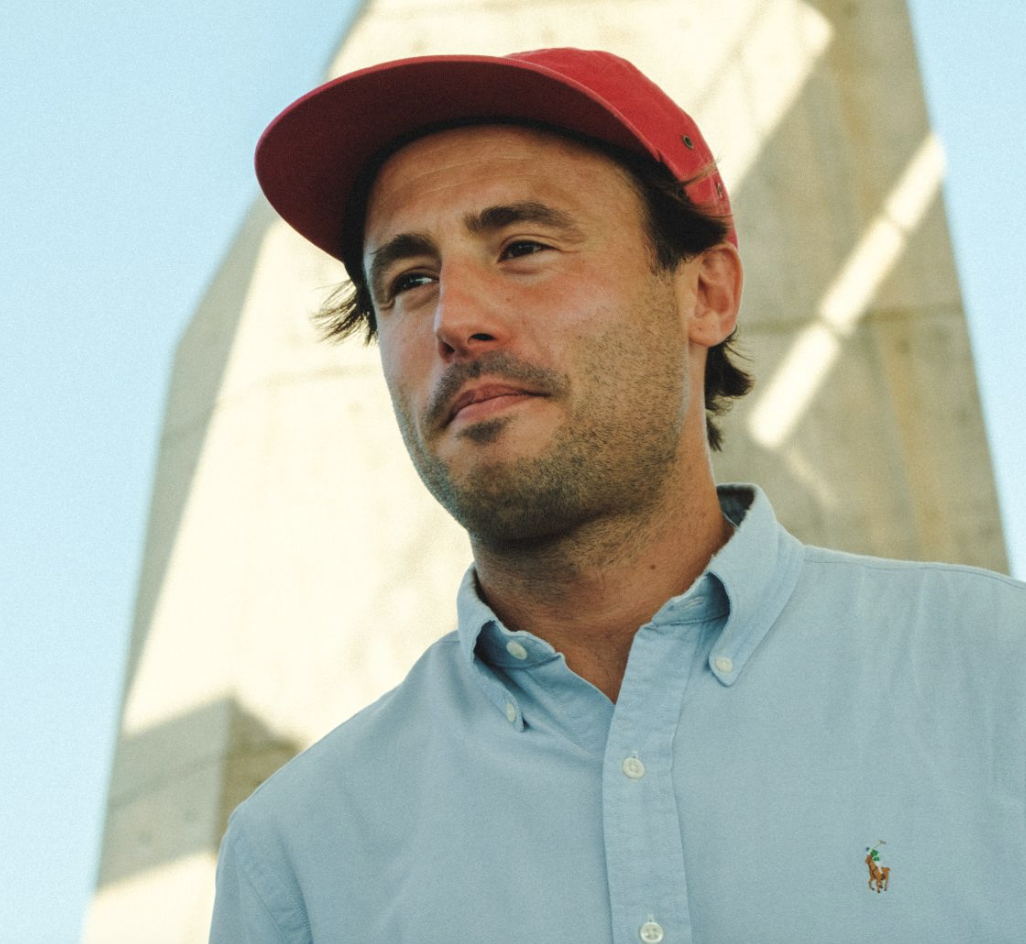
For an artist whose music draws inspiration from the warmth and groove of French Touch, DJ Sandwich has never been interested in recreating the past. Instead, he uses its philosophy as a foundation, building stripped-back house records from the smallest musical ideas while allowing his sets to move freely between deep house, minimal and deep-tech without becoming confined by genre.
Beyond the booth, he's channelled that same ethos into Digital Freedom. A label, party series and creative platform built around thoughtful curation rather than chasing trends. In an era increasingly shaped by algorithms, the project champions slower growth, meaningful artistic identity and the belief that music can still offer a genuine escape from the noise of everyday digital life.
We caught up with DJ Sandwich to discuss the enduring influence of French Touch, the lessons learned from seven years behind the decks at Barcelona's legendary The Loft, the vision behind Digital Freedom, and why building a community with soul matters more than ever.
Your sound draws heavily from the French Touch era, but it never feels nostalgic. What is it about that movement's approach to groove, sampling and simplicity that still feels relevant in today's club landscape?
For me, the French Touch influence is less about nostalgia and more about the way of starting a track. I’m very drawn to the idea of building a production from a small musical identity: a vocal sample, a tiny chord, a note, or a fragment taken from an old record. Something that immediately gives the track a direction.
I don’t usually start with a drum pattern and then add elements on top. I prefer to begin with something that already suggests a mood or a story, and then build the groove around it. From there, the track might end up closer to deep house, minimal house or deep-tech, but the starting point is often that sampled idea.
That’s what still feels relevant to me about the French Touch approach: the simplicity, the attitude, and the ability to turn a very small musical detail into a whole club track.
You've spent years moving between house, minimal, deep house and deep-tech without committing to a single lane. Do you see genre as a useful framework anymore, or are you more interested in building a feeling across a set regardless of labels?
I still see genre as a useful starting point, but not as something that should limit the whole journey. You can say “house”, but house is already a very wide world. My base is definitely house, deep house and minimal sounds, but from there I like to move around.
In a set, I’m interested in creating movement. I might go into breaks, more ambient moments, or something with a more electro feeling, and then bring it back again. For me, that dynamic is much more interesting than playing 20 or 25 tracks that all sit in the exact same lane.
So genre is a guide, not a cage. It gives me a foundation, but the important thing is the feeling you build across the whole set.
After a seven-year residency at The Loft in Barcelona, how has your relationship with DJing changed? Has playing so many different rooms across Europe altered the way you think about reading a dancefloor?
I wouldn’t say my relationship with DJing changed after The Loft. It’s more that The Loft shaped the foundations of who I am as a DJ.
Spending seven years as a resident, especially doing warm-ups, teaches you things that are impossible to learn any other way. You learn patience, how to read a room, when to hold back, and how not to throw all your biggest records too early.
Sometimes the hardest thing is not playing to a packed room, but keeping a small room engaged and slowly building the energy from there. That gives you a lot of dancefloor psychology.
For me, that residency was the real school. It’s one of the best things that can happen to a young DJ: having a place where you can play regularly, make mistakes, understand timing, and learn how to build a set properly.
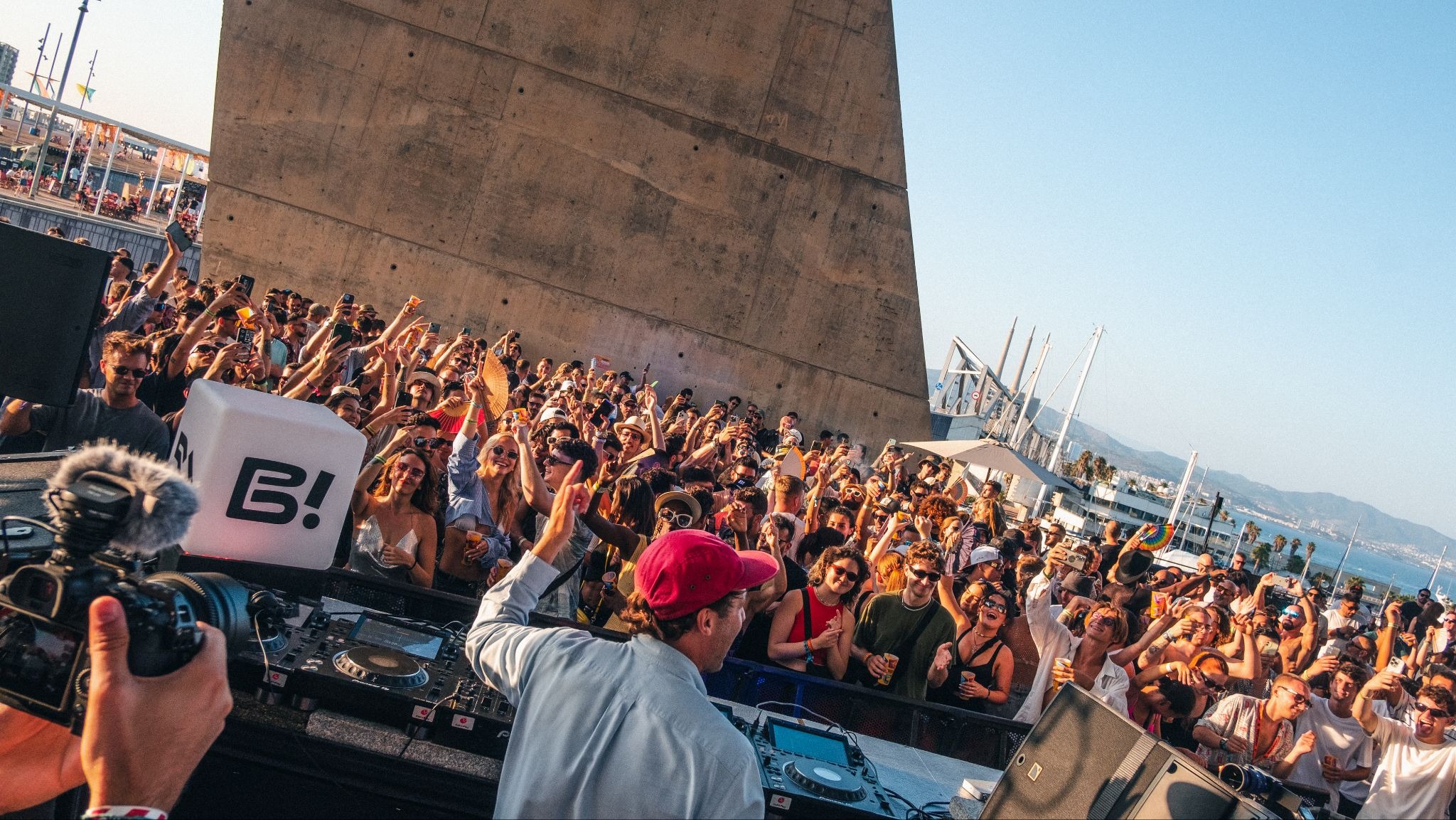
Digital Freedom is more than a record label. It's also a party series and a curatorial platform. What gap were you trying to fill when you started it, and what does "A Music Retreat to Dance In Peace" actually mean in practice?
With Digital Freedom, the main idea was to create my own space. A place where I could release music, curate events, develop the visual identity and build a narrative in my own way, without having to wait for another label or fit into someone else’s idea of what the project should be.
Releasing music through other labels is great, but it can also be slow and restrictive. With Digital Freedom, if I want to release one of my own EPs, I can do it. If I discover an artist I really connect with, I can release their music too, even if it sits in a slightly different corner of the sound.
The label is only one part of it. The events are where the idea becomes physical. We’ve worked with artists such as Ian Pooley, Garrett David, Logic1000, Aman Umber, Alec Falconer and Tiago Walter on the event side, and released music from artists including V.I.C.A.R.I., Downtown Sai, Hostox, Hiroyuki Kato and others through the label.
“A Music Retreat to Dance In Peace” is really about that feeling: creating a space where you can disconnect from everything else and focus on the music, listening, dancing and being present with it. Not in an over-serious way, but with care, peace and intention.
Independent labels often have to balance artistic identity with the realities of algorithms, streaming and social media. How do you protect Digital Freedom's vision without becoming trapped by the constant pressure to produce content?
It’s a difficult balance, honestly. Digital Freedom is still very much driven by me, so there are a lot of things to take care of: making my own music, discovering artists, planning releases, working on the visual side, curating events, and then also trying to feed social media all the time.
That pressure can become stressful and frustrating. You can easily start thinking you’re doing something wrong because the engagement is not huge, or because the numbers are not growing fast enough. But I don’t want the label to become fast food.
I try to be consistent, but I don’t want to release music or create content just because the algorithm needs to be fed. If that becomes the priority, the quality and identity of the project suffer. I prefer to move a bit slower and make sure that what I release really feels right for Digital Freedom.
Of course I’m aware of algorithms, streaming and social media, but I don’t want them to be the ones making the decisions.
There's an interesting tension in the name "Digital Freedom." On one hand, digital tools have made it easier than ever to release music independently; on the other, artists are increasingly dependent on platforms they don't control. What does digital freedom mean to you in 2026?
The name means exactly what it says, in a way. I feel that we are becoming more and more trapped inside the digital world: screens, platforms, notifications, constant noise. Music is also part of that digital world now, of course. We make it with technology, release it through platforms and often experience it through screens.
But for me, music can also be the escape route. That’s the tension I like in the name Digital Freedom. It’s not about rejecting technology, because that would be unrealistic. It’s about using music as a way to disconnect from the noise and reconnect with something more physical, emotional and human.
That’s why the events are important: they turn the idea into a real moment, with people in a room, listening, dancing and sharing the same energy. In that sense, Digital Freedom is about finding freedom through music, even inside a digital world that can sometimes feel quite overwhelming.
Also, to be honest, I just thought the name sounded good.
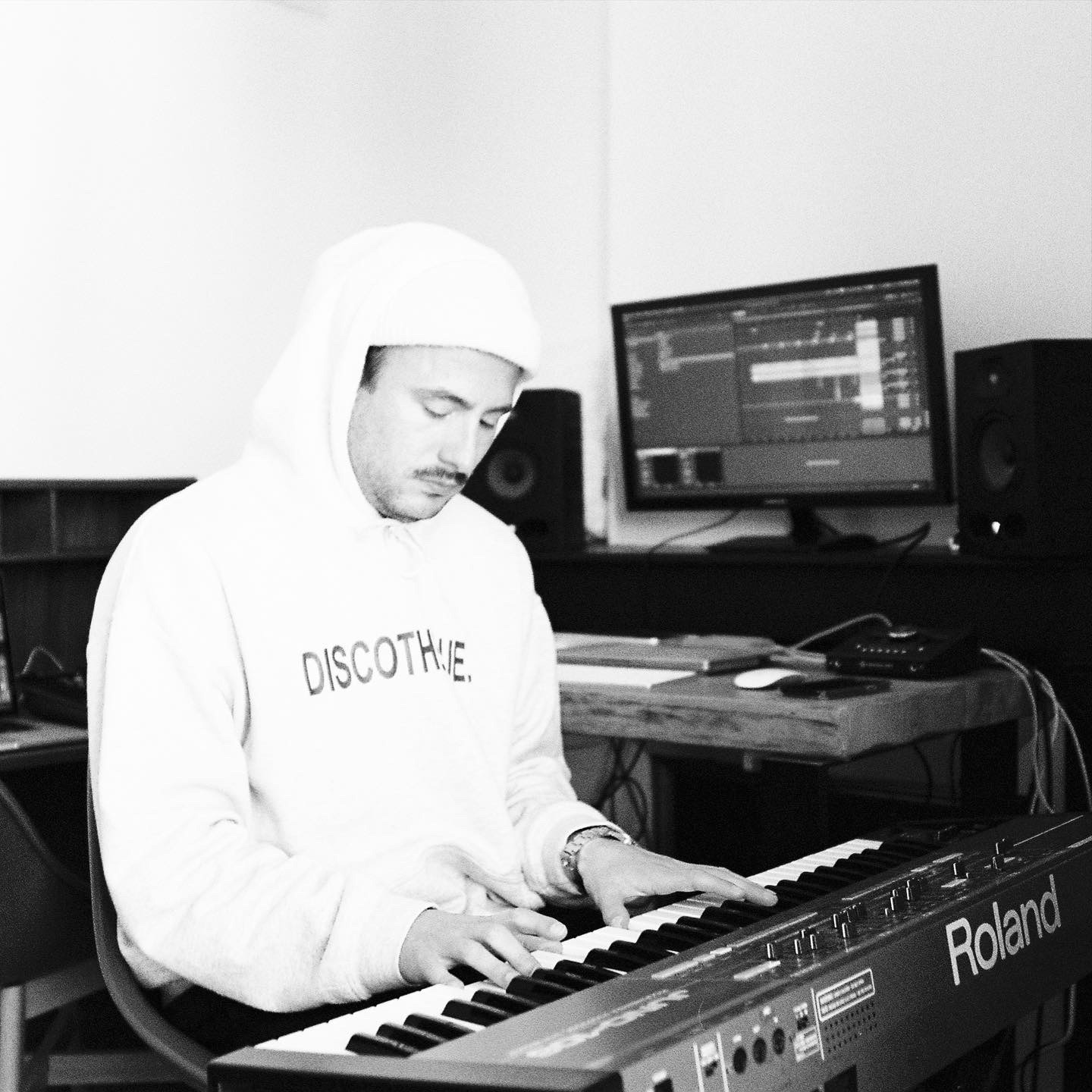
Looking ahead, between your upcoming releases and the growth of Digital Freedom, what would success look like in five years? Is it about expanding the platform, discovering new artists, or simply creating spaces where people can experience music differently?
For me, success in five years would be to keep building a path that feels honest and exciting. I want to keep releasing my own music and remixes, but also use Digital Freedom as a way to connect with new artists, learn from them, build relationships and understand more of the music world around me.
I would love Digital Freedom to become a place where people come to discover quality music and feel connected to a certain vision. Of course everyone wants to grow, but I’m more interested in building something with identity than just chasing numbers.
In five years, I’d be happy to have a strong catalogue, some vinyl releases, regular events, and a community of artists and people who understand music in a similar way: as something to enjoy, to disconnect, to share and to learn from.
I’m also interested in expanding the visual and lifestyle side of Digital Freedom through limited drops or collaborations with brands, but always as an extension of the music, not as something separate from it.
So yes, growth is important, but only if the project keeps its soul. That’s the real goal for me.
To close, what's next for DJ Sandwich? What should listeners be keeping an eye and ear out for in the near future?
There is quite a lot of music coming, which feels exciting. On the DJ Sandwich side, I have a vinyl VA coming on JUUZ Records alongside Steve O’Sullivan and Daniel Meister, a JUUZ EP with two original tracks and a remix from Fedo, a track on an upcoming Pirka VA, and some new music planned through Digital Freedom.
I’m also working towards a possible DJ Sandwich album on Digital Freedom for early next year, which would be an important step for me as an artist and for the label as a platform.
Alongside the releases, I want to keep developing the DFMA Podcasts, which will be coming out regularly on Digital Freedom’s SoundCloud. So the next step is to keep building DJ Sandwich as the artist project, with Digital Freedom as the wider space around it.
Find out more about DJ Sandwich and Digital Freedom here