.svg)



Lauren Ritter discusses her new Memory Detached EP, relaunching her Rift Vision imprint.
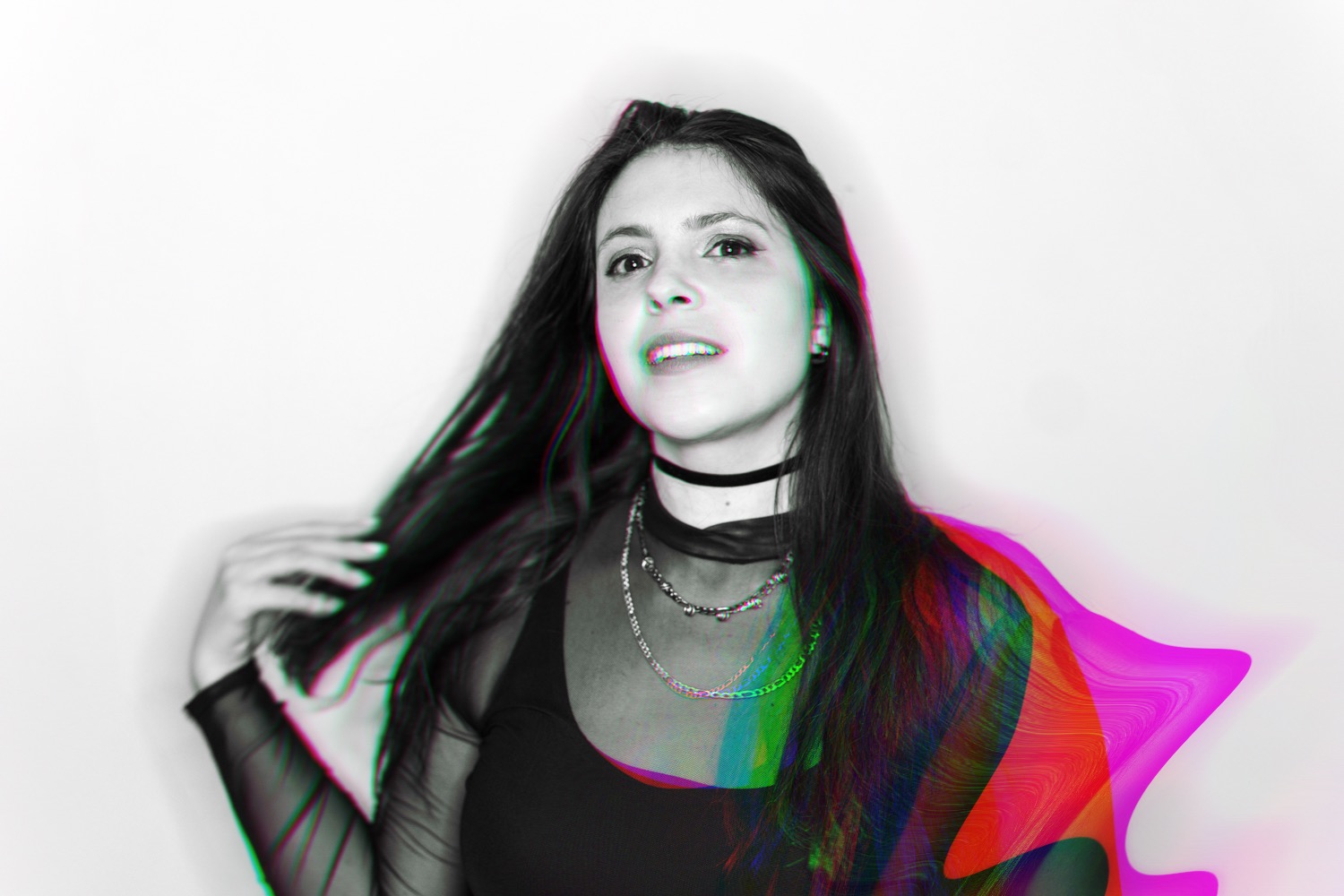
Memory Detached feels like a statement of transformation, both musically and personally. What was happening in your life and creative process that led you to make this record, and why did now feel like the right moment to relaunch Rift Vision?
Sobriety is not always the easiest topic to discuss in nightlife, but it’s the truth of where this EP began. Within the first ten days of getting sober, I opened Ableton and realized that my ear, and my entire brain, had shifted. The way I heard and processed music felt completely different. My long-held inclination toward slower, softer, dreamier sounds had disappeared and what was resonating instead were 130+ BPM harder, kinetic grooves that matched the pace of my thoughts. My mind was moving faster, the wheels constantly turning, and that energy started showing up in the music I was making. This shift became the turning point, not only changing the music I make, but also my workflow in the studio, the way I DJ, and how I connect with people on the dancefloor.
I see this EP as a bridge. Tracks like “One Step Forward” and “Memory Detached” hold the themes of where I’ve been, while “State of Flux” and “Going Up” point toward where I’m going. Relaunching Rift Vision now felt right because the music finally reflects the version of myself I’ve been growing into.
The title track explores themes of lineage, womanhood, and remembering oneself. Can you talk about the inspiration behind "Memory Detached" and how working with Tenesha The Wordsmith helped bring those ideas into focus?
Tenesha is a long‑time collaborator and friend, someone I admire deeply both as an artist and as a person. She was actually the first artist I ever invited onto Rift Vision! That first collaboration was “Thirst Trap” on RV001 in 2020, and we’ve continued creating together ever since. Relaunching the label with her voice on this EP felt like a full‑circle moment.
When I started writing the melody for “Memory Detached,” it felt drenched in nostalgia and reverence. I sent her the themes around the EP (the passing of time, memory, evolution), and she came back with a beautiful poem that unlocked the emotional core of the track.
In her own words: “I often write about connections through a maternal lens. Understanding legacy through a maternal lens is how I am able to connect to my own internal power.”
We’re also working on her artist album right now, which will be coming out on Rift Vision this summer!
"State of Flux" was written, arranged, recorded, and mixed in just seven hours, which is remarkably fast. Did that sense of urgency and spontaneity unlock something creatively that a more considered approach might not have captured?
It is remarkably fast, especially considering I have projects from 15 years ago that still aren’t finished, hah! But over the past six months my workflow has tightened a lot. I’ve gotten really familiar with my gear, found an arrangement style that feels natural, and most importantly, I’ve learned to recognize when something is done instead of over‑obsessing and nitpicking.
For years, so many of my ideas sat unfinished because of imposter syndrome. I’m finally learning to be more objective, asking myself… Is this idea viable? Does it belong in the world of this EP? Does it reflect where I want to go musically? Is it done enough? If the answer is yes, I let it be.
A friend recently told me that imperfections in music are like carbon dating, because they capture exactly who we were in that moment. That really stuck with me. Nothing will ever be 100% finished, so I’m learning to live in immediacy, trust myself, and embrace the flaws. “State of Flux” is the sound of me doing exactly that.
Across the EP there's a noticeable tension between movement and reflection, between dancefloor energy and introspective storytelling. Was that contrast something you consciously set out to explore, or did it emerge naturally through the writing process?
It emerged naturally. While writing this EP, I was thinking a lot about the kind of artist, and person, I wanted to become, so there was already a layer of introspection running underneath everything I was making. At the same time, my ear was shifting toward faster, more physical music, so the dancefloor energy showed up naturally.
That tension between movement and reflection is where I’ve been living creatively. I’m processing a lot of personal change, but I’m also reconnecting with the joy and immediacy of dance music. The EP ended up capturing both sides without me intentionally trying to force them together.
You've described this release as a shift in your artistic trajectory. How do you feel your sound has evolved from your earlier work, and what aspects of your musical identity have remained constant throughout that journey?
Most of the music I’ve released up until now has lived in a more introspective, liminal space, as much a backdrop for daydreaming as for dancing. Part of my ear changing meant I suddenly felt pulled towards harder grooves, grittier textures, and faster tempos. I’m prioritizing immediacy and fluidity over unattainable perfection, and I’m having fun getting lost in flow without any of the self-judgment that used to stall the creative process.
At the same time, the core of who I am musically and emotionally hasn’t changed. I grew up as a classical violist and violinist who also happened to be obsessed with dance music, and I adored Schubert as much as I did my Tunnel Trance Force CDs. Soaring, sentimental melodies still make my heart sing. Driving, repetitive drums still focus me. I’m still a romantic daydreamer at heart, I’m just honoring these parts of my musical DNA in a new way moving forward.
The production throughout the EP feels particularly tactile and hardware-driven. What role has your studio setup played in shaping the character of these tracks, and are there any pieces of gear that became especially important during the creation of this record?
The gear is integral. Last December I completely reworked my studio setup, swapping out some of my usual keyboards (Yamaha DX7, Kawai K5000S) for more programmable, hands‑on instruments. These days my workflow is built around a few core pieces: the Elektron Analog Rytm for drum programming, the Digitakt for pads, arpeggios, and vocal chops, the Roland SH‑01A for basslines, and the JU‑06A and Dreadbox Typhon for sampling chords and leads into the Digitakt. Having a mostly hardware‑driven process lets me feel the groove and commit to ideas quickly, and that immediacy shaped the character of the EP.
Tracks like "Going Up" and "One Step Forward" showcase very different sides of your sound, from peak-time grooves to raw self-sampled introspection. How do you approach creating a cohesive EP when each track occupies its own emotional and sonic space?
This EP went through several iterations and tracklists before it landed where it is now. I knew I wanted it to open and close in more liminal, fluid spaces, with the warmer, disco‑tinged tracks living in the middle.
“One Step Forward” is the most obvious nod to the push‑and‑pull between progress and decay, and sampling my own voice felt like a self-directed reminder to never get too complacent. “Going Up” is the complete opposite, it came from a place of unhinged joy and spontaneity. I literally sampled the elevator in my building with a Zoom recorder! They sit on different ends of the spectrum, but they both reflect real parts of where I’ve been.
For my first release in over two years, I wanted to honor the full range of that journey I’ve been on, the light, the dark, the introspective, the ecstatic, etc. The cohesion, and at times the contradiction, comes from that place of honesty and from not forcing every track to fit the same mold.
With Rift Vision now entering a new chapter and a busy release schedule already mapped out into 2027, what does success look like for you over the next few years, both for the label and for Lauren Ritter as an artist?
Success, for me, looks like releasing consistently, trusting my instincts, pushing my sound forward, and not letting perfectionism slow me down the way it did for the past two years. It means building Rift Vision into a space where my friends can grow with me, and creating a catalog that I’m proud of. Most importantly, success to me is staying connected to the joy and momentum that brought me back to producing in the first place.
BUY LINK: http://traxsource.com/title/2807062/memory-detached