.svg)



Luke C. On Chinatown, Creative Renewal and the Spirit of Los Angeles Underground Culture
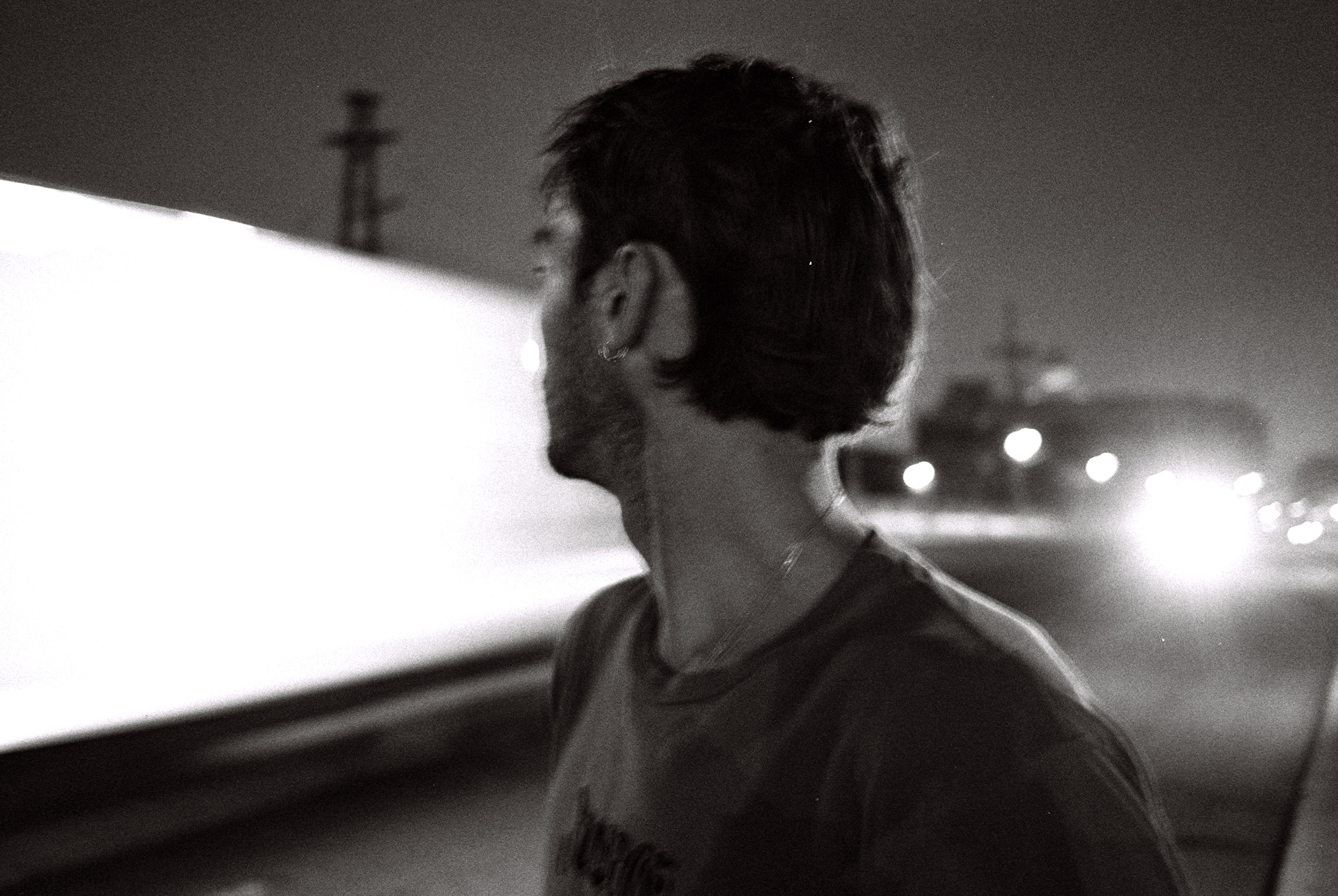
Up High In The Chinatown Lights feels incredibly rooted in a specific place and moment in Los Angeles. What was happening around you during the writing process, and why did Chinatown become such a powerful source of inspiration for these tracks?
The six tracks were loosely put together over about a year and a half. In that time, my wife and I found out we were pregnant, I purchased, redesigned, and ran the Silverlake Lounge with my business partner and best friend, and, most recently, we started manifesting a dream spot in Chinatown. Lot’s of late-night drives, dance floors, early morning melancholy, and feeling the throb of this ever-changing city. Chinatown felt like the destination the tracks had to eventually make it to.
The record paints a vivid picture of Chinatown's contrasts, bustling streets, empty plazas, old traditions sitting alongside new creative energy. How do you think the neighbourhood has shaped both your music and your outlook as a label owner?
Chinatown has reignited my passion for music and art, especially this underground culture that we all love. The energy down there feels like what you read—or hear—about New York or LA or Berlin in the 80s and 90s. There’s a bubbling spirit that feels unshakeable. Studio spaces are run down and cheap and artists are finding their way there naturally, joining an area with its own history, traditions, and stories. Tapping into that energy has felt powerful and refreshing. It’s been quite the antidote to feeling jaded about everything.
You mention writing these tracks while preparing to reopen a Chinatown nightlife institution. How did the realities of running a venue and building a community influence the sound and mood of the EP?
The spot we’re putting together in Chinatown will be the latest in a string of spots here in LA. Silverlake Lounge came before and has as much of its essence embedded in this EP as Chinatown. At the lounge—as we will with Chinatown—we focused on quality, classy music with enough edge to keep it interesting. The nature of running a venue means not only are you constantly immersed in the music and artists playing but you’re also always musing on the idea of curation. How does it all fit? How can I keep people interested across genres, eras, and styles, while staying interested myself? That was the biggest influence on this release: the idea of cross pollination and it being coherent. I knew the tracks would all be anchored in different club-based styles, so then it was about using curation—the tracks themselves, the sounds in them, the sequencing—to make it make sense as a whole.
There's a strong sense of atmosphere throughout the release, from the spoken-word fragments to the grit-covered samples and stumbling vocal lines. Were these elements consciously chosen to reflect the character of Chinatown, or did they emerge naturally from the creative process?
I would say both things are true. The way I generally work is fast and free—I produce fast and without thinking. I try to produce in batches and without fretting or spending time on the little details. I have a template I open with a couple drum machines, samplers, and a synth or two, and then I just purge ideas. I don’t worry if I have the right kick, or if somethings EQ’d perfectly. Record, bounce, move on. I’ll leave them at least a week or so and go back and listen with fresh ears. The ones I move forward with I then get a little more granular, I’ll be more intentional with choosing samples or synths to fit a theme and delete or change what isn’t working to that theme or goal. There is a gritty siren sample on the second track, “Plaza (to 87),” for example, that was specifically chosen as it feels like something bleeding in off the street in Chinatown. I remember doing that in the third or fourth session on that track, down the line.
Funnily enough, working this way also leads to moments that feel almost psychic. I notice things in the original ideas that only make sense later on when put into context—vocal lines or samples that seem to predestined to the theme I’ve landed on months or years later. The creative process can be a trip.
Velvet Bikini has developed a distinctive identity over the years. What originally motivated you to start the label, and how has your vision evolved as both Los Angeles and the wider underground music landscape have changed?
The original vision, to go back to a previous point, was to present music of different styles and somehow make it make sense. Most of my favorite labels do it: AD93, Offen Music, R&S, XL, Ghostly/Spectral, and the list goes on. What can I add to that and how does Los Angeles guide it? That’s really been the driving force. To be honest, I lost the love at some point couple years ago but something in this city is pushing me back in, so I’m listening, trying not to overthink it, and moving forward. I feel an energetic second wave, which is exciting.
Los Angeles has no shortage of electronic music scenes, from warehouse parties to established clubs and DIY spaces. From your perspective, what makes the city's underground community unique, and where does Velvet Bikini fit within that ecosystem?
The expanse of LA is truly unprecedented. Not just its size but the breadth of offerings, too. In one 24 hour slot you could go to a handful of disparate, world-class shows and parties. That might be a free live modular jam from Leaving Records in a park near Dodger Stadium, into HTRK at the Hollywood Forever cemetery for Sunset, then Moritz Von Oswald live under a bridge south east of downtown, and, finally, an afters with a MRBL or Dialogue crew to god-knows-what time in the morning. All the locals know their shit and are all quality artists in their own right, and it’s an immigrant city, so it’s very welcoming, at least in these circles. With Velvet Bikini, I hope to pick artists and music from each scene and bring it all together as multi-media projects.
As someone balancing the roles of artist, label owner and venue operator, what have you learned about building sustainable creative spaces in a city as complex and fast-moving as Los Angeles?
Consistency, loyalty, and quality. It sounds cliche but you have to love it, or at least feel deeply the need for presenting art in this world. I constantly hear complaints about the younger generations not getting it, and I’ve fallen victim to that way of thinking, too. I can tell you with certainty, however, that I would be in a much different place today without the guiding hands and voices of the generation above me. If you don’t want our society and culture to disintegrate into an endless void of AI slop, then stand up and get to work.
Listening to Up High In The Chinatown Lights, there's a feeling that something is always just about to happen beneath the surface. Looking ahead, what excites you most about the future of Chinatown, Velvet Bikini and the creative community you've helped foster there?
To continue the ideas of some of the previous answers, I think there’s a bubbling energy here that feels exciting. We feel on the edge of something new, whether good or bad I don’t know, and I don’t think it matters. All that matters is that things keep moving. I see enough cool shit coming from the younger generation in LA to keep nihilism at bay. I don’t love a lot of what they are doing or listening or dancing to, but the older crew hated half the shit we liked when I was that age, so again, as long as they are out and about causing havoc and producing shit that divides people, I think we are going to be ok.
BUY LINK : https://lukecheadle.bandcamp.com/album/up-high-in-the-chinatown-lights