.svg)



Scandinavia's Havsmörker discuss their dub techno, jazz and Nordic folklore infused 'Ilvader' EP on Refraction Records
Emerging from the windswept landscapes and remote archipelagos of Åland, Havsmörker occupy a unique space where dub techno, contemporary folk, jazz and environmental storytelling converge. Comprised of Axel Hjo and Anton Johansson, the duo draw deeply from Nordic history, field recordings and improvisation to create immersive sound worlds that feel both ancient and strikingly modern. Their latest EP, Ilväder, released via Refraction Records, takes its name from an old coastal term describing treacherous and unpredictable weather, serving as a fitting metaphor for a project rooted in the fragile relationship between humanity, nature and place. Ahead of the release, we caught up with the pair to discuss the record, life on the Åland Islands, folklore, improvisation and the evolving world of Havsmörker.
Ilväder takes its name from an old coastal word describing unpredictable and treacherous weather. What was it about this particular term that resonated with you, and how does it reflect the themes explored across the EP?
Ilväder describes weather that is neither storm nor calm but something treacherously in between – the kind that shifts without warning, that can’t quite be pinned down to more than unpredictability. That ambiguity felt like the right frame for the music we were making. Our first EP Dimma was about fog, about losing your sight and navigating by ear. Ilväder is about something more volatile and conceptually more connected to the most important aspect of weather at sea: wind. Ilväder about the way conditions change under your feet, the tension between comfort and danger. It’s also a word that has disappeared from living language. So there’s a symbolic layer of mourning in it. However, recalling a tiny lost tradition is itself an act of hope.
The release feels deeply connected to the sea, weather and the landscapes of Åland. How has growing up in and around the archipelago shaped the way you approach composition and sound design?
We both grew up on Åland, surrounded by water and weather in a very immediate way. The sea isn’t a backdrop there – it’s the infrastructure. It determines what you can do on any given day. That kind of dependency teaches you to listen. You learn to read the wind, the colour of the water, the behaviour of birds. When we started making music together, we realised that this habit of listening carried over directly: we respond to environments rather than impose ideas on them. A lot of our sound design begins with field recordings from specific places in the archipelago – not as “atmosphere” in the background sense, but as actual compositional material. The grain of a rock, the rhythm of waves against a particular shore, the resonance inside an old kitchen – these things shape pitch, tempo, texture. The landscape doesn’t illustrate the music; it generates it.
Much of Havsmörker’s music emerges through improvisation. Can you tell us about the creative process behind Ilväder and how the material evolved from your 2023 tour through the Åland archipelagos into the final recordings?
In 2023 we did a tour with a small boat through the Ålandic and Aboland archipelagos, playing in medieval stone churches, old pilot houses, tractor museums and the fabulous boutique hote, Hotel Svala, – often with very basic equipment and no soundcheck, just responding to whatever the room and the weather offered. That is really the core of how we work: we treat performance as improvisation sessions, very much in the spirit of folk music jams where you listen, respond and let the music find its own shape rather than executing a plan. The basic programming of our drum machines and synths from those concerts became the seeds for Ilväder. We then brought those ideas into Studioepidemin in Gothenburg in 2024, for clean studio recordings of all the live acoustic elements. The challenge, and the thing we’re always chasing, is to keep the organic live-feel of the improvisation intact while giving it the production depth and physical impact of studio work. We want it to breathe like a folk session but hit like a sound system. Fredrik Mattsson joined us on bass clarinet, and his playing reinforced exactly that balance – deeply rooted in acoustic tradition but completely responsive to the electronic textures we were building around him.
Your work blends field recordings, analogue synthesis and acoustic instrumentation in a way that feels both ancient and contemporary. How do you strike a balance between documenting a place and transforming it into something more abstract and musical?
We don’t really think of it as a balance – more like a conversation. A field recording of stones rolling on a stone table already has rhythm, pitch, dynamics. Analogue synthesis already has organic unpredictability. And traditional instruments like the hardingfele or hurdy-gurdy already carry centuries of musical information in their timbre. When we bring these elements together, we’re not trying to preserve one and stylise another. We’re looking for the moment where they become indistinguishable – where you can’t tell if a sound is the stone or a synthesiser, if a rhythm is wierd or a kick drum. The aim is never documentation; it’s transformation. We want you to feel the harshness of rocks even if the source turned out to be a wavefolded squarewave..
Fredrik Mattsson joins you on bass clarinet for this release. What did he bring to the recordings, and how did his contribution help shape the atmosphere of the EP?
Fredrik is an Ålandic saxophonist we’ve known for a long time – he already played on Dimma. For this EP he really explored the full spectrum of the bass clarinet, which turned out to be transformative. The bass clarinet has this incredible range between warmth and unease – it can sound like a foghorn, like breath, like something ancient surfacing. It sits in a register where it blends naturally with our low-end synthesis but retains an unmistakably human, physical quality. Fredrik approaches improvisation the way we do: he listens more than he plays, he leaves space. His lines on Ilväder don’t sit on top of the electronics – they weave through them, almost like another layer of field recording. He gave the EP a bodily presence that the machines alone can’t provide.
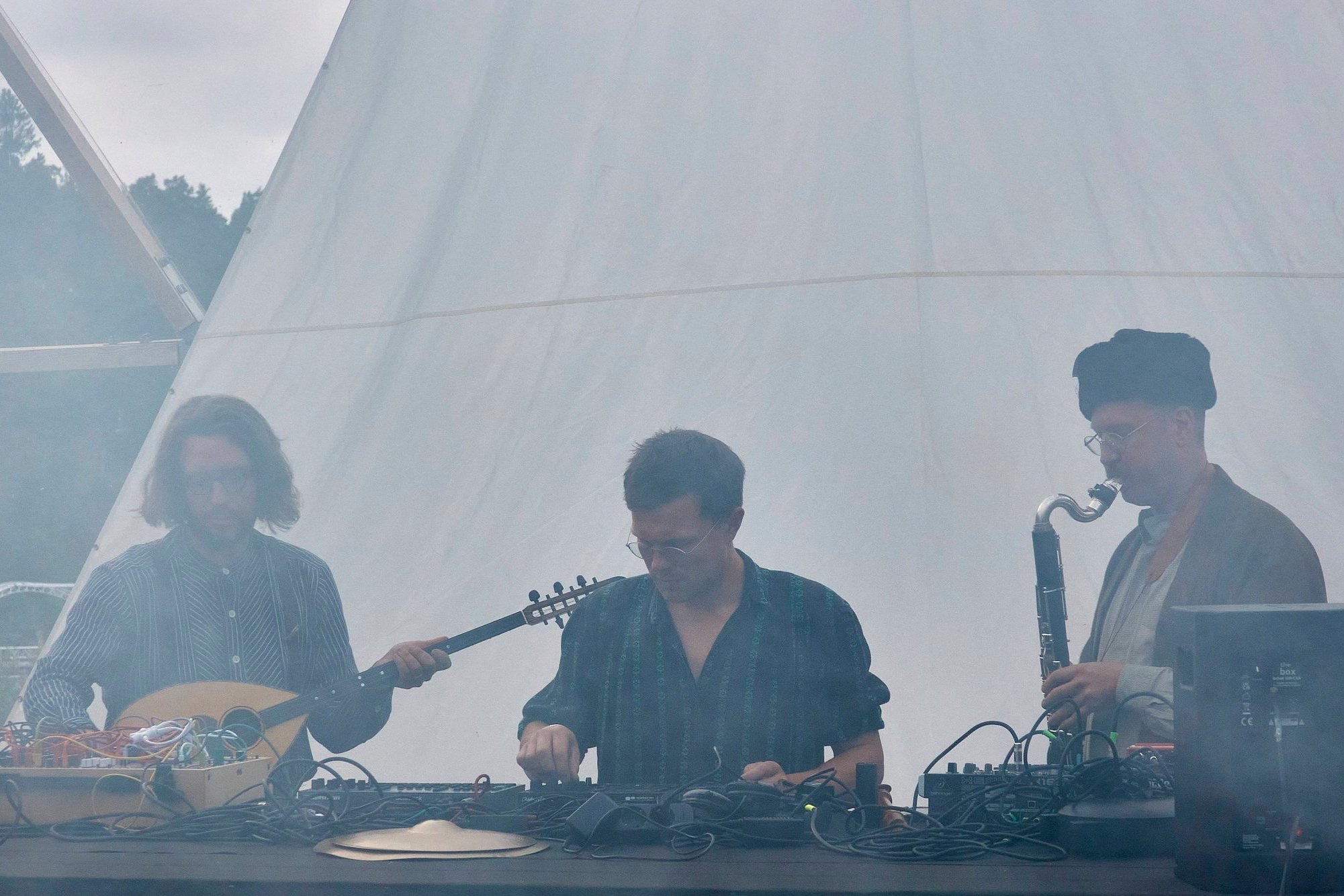
Critics and listeners often describe Havsmörker as existing somewhere between dub techno, jazz and Nordic folk traditions. Do you consciously think about genre boundaries when creating music, or is the project driven more by concepts, environments and emotions?
We never start from genre, but have no strong feelings against labeling our music in terms of genre. For sure many tracks from the tree genres mentions form an important part of our pre-conception of music and musicality.
The idea of music as a “space-bound phenomenon” seems central to Havsmörker. Whether performing in archipelago churches or international festivals, how important is the physical environment in shaping both the music itself and the audience’s experience of it?
It’s everything. We describe our music as “tradition-bearing and space-bound” because we genuinely believe that music is inseparable from the conditions in which it’s heard. A stone church on a small island in the Baltic gives you a seven-second reverb and an audience who arrived by boat – that’s a completely different starting point from an urban concrete club basement. It’s also why we founded the Kokong festival on Åland – we wanted to create a context where artists from the electronic world, people like Tin Man, Mental Overdrive, Exos, could explore what it means to play in an archipelago setting, where the landscape is as much part of the performance as the sound system.
Furthermore, as already mentioned, our live-performances has also been very formative for what is later recorded and produced. Thus, our creative process is always a conversation between different settings, a conversation between the same basic structures explored both before the audience and before the studio engineer: very recognizable for live-bands, less so for electronic studio producers.
With Ilväder arriving on Refraction Records and new material forthcoming on Jazzland Recordings featuring Canberk Ulaş, it feels like Havsmörker is entering a new chapter. How do these upcoming releases expand the scope of the project, and where do you see the journey heading next?
The Refraction release feels like a natural home for Ilväder – a Catalan label with deep roots in dub and electronic music that understands the kind of slow, space-aware sound we’re after. The vinyl edition coming in August is important to us; this music deserves a physical format. The Jazzland collaboration is a different animal entirely, although stemming for the same studio sessions. Working with Canberk Ulaş and his duduk opens up completely new harmonic and emotional territory – it connects the Nordic folk tradition to something much older and further away, and it brings us into contact with a jazz and world music audience that might not otherwise encounter our work. That’s deliberate. We’re riding a wave right now where contemporary Nordic folk music is getting real attention across Europe – friends of ours at Supertraditional Records, Sara Parkman and others are leading that. We’re on the outer edge of that movement, but we benefit from it and want to contribute to it. There are concerts planned for summer and autumn, and we’re already thinking about the next long-form work.
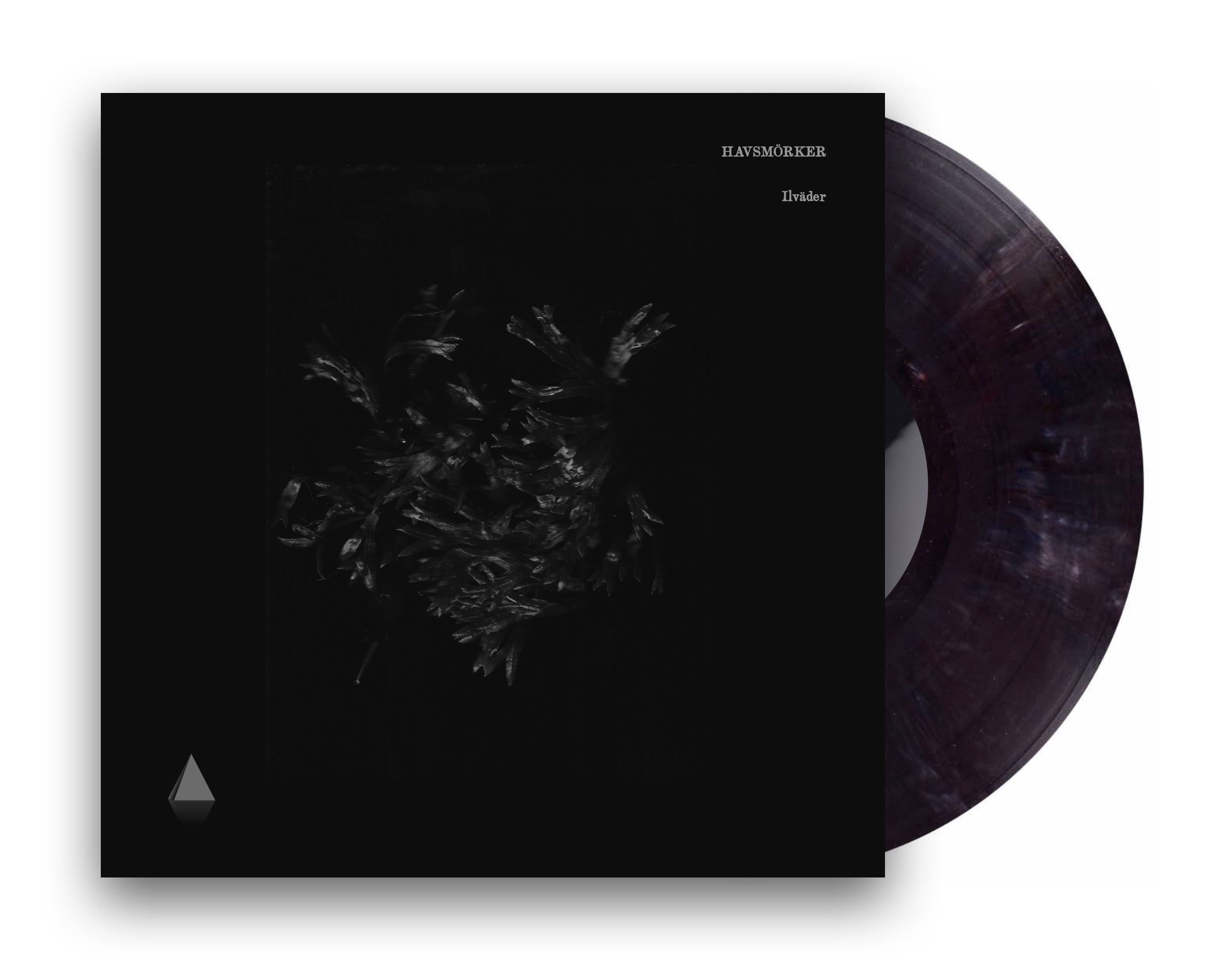
BUY LINK: https://refractionrecords.bandcamp.com/