.svg)



Houz speaks about his new EP on Pintai 'Humanity Divided'
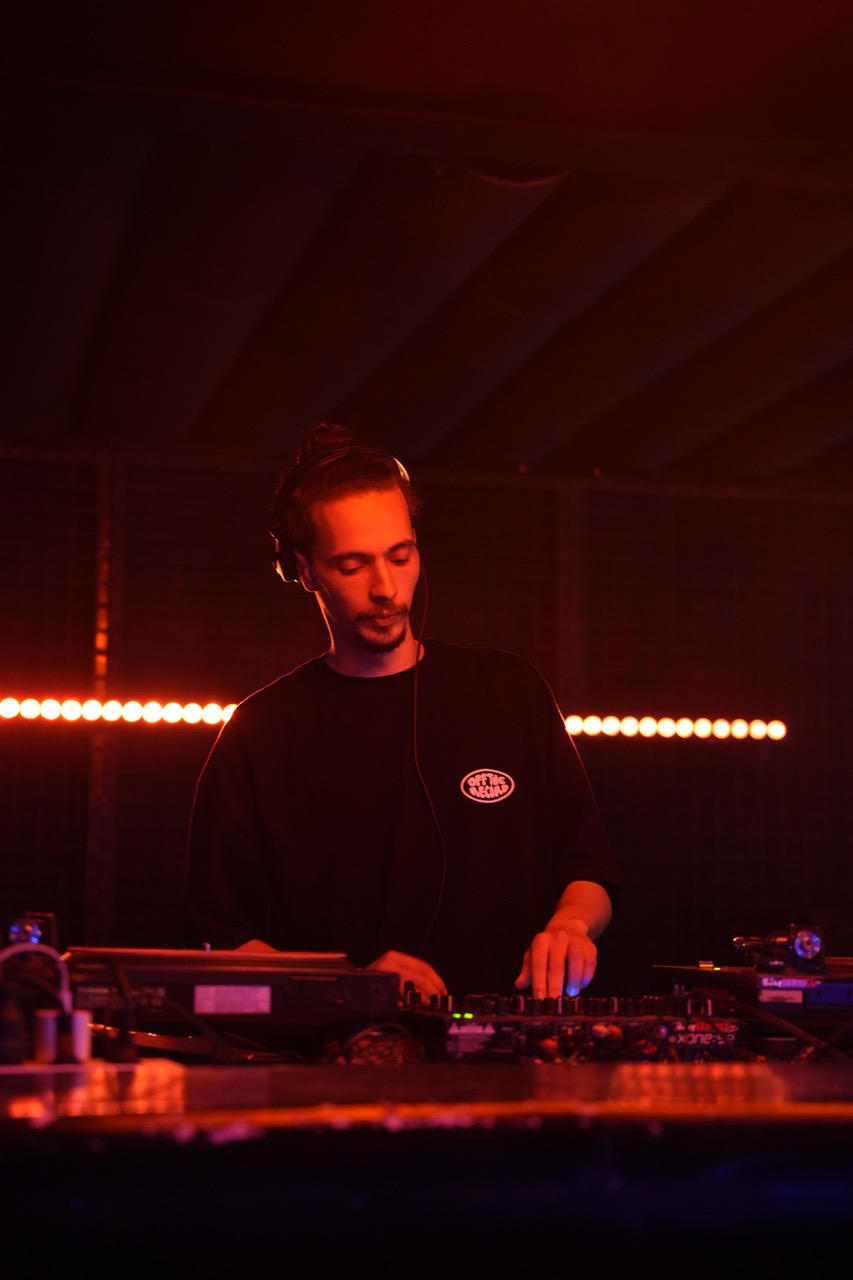
Tunisia’s Houz steps onto Pintai this April with his Humanity Divided EP, a refined and introspective four-track offering that further cements both artist and imprint’s affinity for deep, hypnotic sound. Operating at the intersection of deep house, ambient, and understated techno, Houz crafts slow-burning, emotionally nuanced compositions built on warm textures, spacious arrangements, and subtle rhythmic movement. Conceived as a cohesive vinyl statement, the project favours restraint and continuity over immediacy, unfolding with patience and precision to create an immersive listening experience defined by depth, atmosphere, and quiet tension. Here he speaks on the project...
‘Humanity Divided’ feels like a very intentional, cohesive body of work. When you began shaping this EP for Pintai, did you approach it as a conceptual record from the outset, or did the theme reveal itself during the process?
Humanity Divided’ wasn’t born from a concept I mapped out in advance, it came from something far more raw. The title track was directly inspired by the reality I was witnessing around me: the wars, the fractures, the overwhelming sense that something deeply human was being lost. That feeling of division hit me in a way I couldn’t ignore, and I knew I had to channel it into sound. It became the emotional anchor of the whole project. As for the EP itself, there was no grand blueprint. No label direction, no pre-planned narrative, just track after track, each one coming from the same place of emotional overflow. Looking back, the cohesion revealed itself naturally, almost without my permission. I think that’s what makes it feel like a body of work rather than a collection of tracks, it all poured out of the same wound.
Your music consistently leans into restraint, warm textures, negative space, subtle rhythmic movement. What draws you to that slow-burning, hypnotic approach rather than more peak-driven club structures?
Emotion was always the guide. The textures, the pads, the layers of sound, these aren't decorative choices, they're how I tell stories. I've always had a cinematic background, and that's deeply embedded in how I approach rhythm. A slow-burning groove isn't a limitation, it's a language. Take 'I'm Around', it's this web of slow textures, cascading pads, strings that feel almost unresolved, like they're reaching for something just out of frame. I spend hours buried in a single synth patch, shaping it, stripping it back, pushing it again until it finally says what I'm trying to say. The same goes for percussions, every texture has a story, and I'll tweak a hi-hat or layer a rim shot over and over until it sits exactly where the emotion needs it to sit. It's obsessive, but that's the process. The groove isn't something I find quickly, it's something I carve out, sound by sound, until the track starts breathing on its own. And there's something specific about the repetition that I lean into. The monotony of a looping chord progression, the cyclical rhythm section, that's not a lack of ideas, it's the point. That repetition creates a hypnotic space where the listener stops waiting for the next change and starts sinking into what's already there. And once that trance sets in, that's where the real storytelling happens. The freedom to layer a subtle shift, to introduce a texture that changes everything without changing the structure, that only works when the foundation is steady enough to hold it. For me, restraint and negative space aren't stylistic postures. They're honest. The music breathes the way I breathe when I'm overwhelmed, slowly, deliberately, searching for stillness inside the storm.
There’s a strong sense of atmosphere across the EP, particularly on ‘Rain Swings Till The Morning’ and ‘Rising Sun’. How important is environment and mood when you’re composing? Do you visualise spaces, times of day, or emotional states as you work?
Environment isn’t just a backdrop for me, it’s a co-composer. Weather, in particular, has always been deeply wired to my emotional state. Each sky, each temperature, each shift in the air carries its own specific feeling, and I’ve learned to listen to that. This EP was born during a very particular chapter of my life; a period of transition, of emotional overload, something close to a burnout. I retreated back to my hometown, a coastal city by the sea, almost instinctively, as if the body already knew where healing could happen. Being close to the water, back in a familiar space, allowed me to reconnect with myself in a way that the music absorbed entirely. As for times of day, I’m naturally a night owl, but this album didn’t belong exclusively to the night. “Rain Swings Till The Morning” is perhaps the most literal example: I started it late at night and finished it as morning broke, on a rainy day. The title wasn’t conceived, it was witnessed. “Rising Sun” on the other hand came very early in the morning, chasing that specific light. The EP almost mapped itself across the hours, the weather, the healing.
As a Tunisian artist now releasing on an Amsterdam-based imprint, how have your Tunisian roots shaped your musical sensibility? Are there cultural, rhythmic, or emotional influences from Tunisia that subtly inform your sound?
Tunisia shaped me before I even knew what music production was. I come from a family of musicians who performed deeply spiritual, rhythmic songs, the kind that don't just reach your ears, they move through your whole body, notably called "Al Hadhra". Growing up surrounded by that rich, oriental musical heritage planted something in me that never left. My first real instrument was drums, my sister encouraged me to start, and from that first beat, I was hooked. Percussions, rhythms, the physicality of it all became my first musical language. I moved on to Cajón, formed a band with friends, and began blending traditional Tunisian and oriental rhythms with funk and reggae, genres that share that same deep, groove-rooted soul. But that's the thing about growing up in Tunisia, you're never locked into one sound. Tunisians are culturally wide open. I was raised on oriental music, yes, but I was also absorbing Jazz, Classical, Blues, Reggae, all of it feeding the same hunger. That diversity trained my ear early, it gave me a sense of groove that doesn't belong to one genre, and it made me restless to keep exploring, keep crossing boundaries. That cross-cultural collision became the foundation of how I hear and feel music. All of that lives inside my work, perhaps more subtly, but it's there.
The title track, ‘Humanity Divided’, featuring Ahmed Haddaji, carries a certain emotional weight. How did that collaboration come about, and what did Ahmed bring to the piece that transformed it?
Ahmed and I go back to 2014, back to when I first picked up the drums. We clicked instantly. He was the singer, I was the drummer, and together with a pianist and guitarist, we formed my very first band. Ahmed wasn't just a collaborator, he was the beginning of my musical journey. So there's something almost poetic about him being on this EP. We lost touch for years, he moved to Italy, I stayed in Tunis, but when we both came back to our hometown, it turned out we were chasing the same thing, healing. And somehow, without knowing it, we'd both drifted toward the same sonic world, the same deep, atmospheric, minimal sound that ended up shaping this entire EP. There was nothing forced about the reconnection. It was just pure alignment. "Humanity Divided" started one night in the studio, social media noise everywhere, wars raging, the world feeling fractured. We began jamming, no plan, no brief. I laid down a dreamy pad, Ahmed started singing over it, then picked up the guitar, added notes, layers, textures. We were building the track together in real time, feeding off each other the way we used to. That session became the spark that initiated the whole EP, the emotional entry point that set the tone and flow for everything that followed. The track opens with the sound of crying babies, a deliberate choice that holds two truths at once: the deaths we were witnessing, and the birth of something hopeful.
There’s a clear thread of continuity across the four tracks, almost as if they’re chapters of the same story. When working within ambient, minimal, and understated techno frameworks, how do you maintain flow without sacrificing tension?
The continuity across these four tracks wasn't engineered, it emerged naturally because they were all made in the same period, from the same headspace. When I compose, I tend to work in two distinct parts. Part one is where I build the atmosphere, experimenting with ambient sounds, layering pads, shaping the flow until the emotion and the story reveal themselves. That's where most of the storytelling lives, in the textures, the movement, the space between sounds. Part two is where the groove enters. I start combining a specific rhythmic flow with basslines, percussions, textures, and drums, and that's where I navigate the tension and release. The two parts feed each other, the atmosphere sets the emotional context, and the groove gives it a pulse, a physical weight. Every track on this EP follows that same architecture. The ambient layers carry my inner world, the groove carries the external pressure. And because all four tracks were born from the same emotional chapter, the thread between them held itself together without me forcing it. That's why it feels like chapters of the same story, same process, same tension, just explored from different angles. In ambient and minimal frameworks, you don't need a drop to create tension. It lives in how the groove pulls without fully releasing, in the balance between what's said and what's left open. That balance is the backbone of this EP.
This EP was conceived as a vinyl-focused statement. Does knowing the listener may experience it in that format influence your arrangement choices, pacing, or sonic details?
Honestly? The vinyl came after the music. It was never a format-first decision. I wasn't thinking about sides A and B, or mastering curves, or needle pressure. I was just making tracks and trying to get something out of my system. But once the EP was done, I sat with it and felt like it needed more than a streaming link. The music had a warmth and a physicality to it that felt like it belonged on something tangible. Vinyl made sense, not because it shaped anything in the process, but because the end result felt right for the format. Something you can hold, something that exists in a room with you. There's a difference between making music for vinyl and realizing your music belongs on vinyl. This was the latter. The format didn't influence the arrangement, the music just found its way there naturally.
Finally, what does “deep” mean to you in 2026? The term is often overused in electronic music, how do you personally define depth in sound and intention?
"Deep" is one of those words that gets thrown around loosely, but for me it's very specific. Depth is the thing that makes you question. It's when music opens a door in your mind that you didn't know was there, shifts your perspective, and gives you this freedom to move between thoughts and feelings without needing to land anywhere. It changes how you perceive reality, even if just for a moment. In sound, I feel that depth comes from a specific place. A certain chord progression, a certain atmosphere that doesn't tell you what to feel but gives you the space to go inward. It's that mysterious quality where the music becomes a mirror. You're not just listening, you're finding something in it, a memory, a feeling, a nostalgia that you can't quite place but somehow recognize. And I think that's the thing about deep music, it doesn't explain itself. It trusts the listener enough to let them bring their own story to it. That's what I was reaching for with this EP. Not music that imposes an emotion, but music that creates the conditions for one. If someone puts this record on and finds themselves somewhere they weren't expecting to go, then the depth did its work.
https://pintai.bandcamp.com/album/humanity-divided