.svg)



Leo Janeiro’s “Tempo”: A Lifetime of Influences
After more than twenty years at the forefront of Brazil’s electronic music landscape, Leo Janeiro steps into a new creative chapter with the release of “Tempo,” his first full-length album. Conceived in a moment of personal clarity and artistic maturity, the project bridges the rhythms, cultures, and emotional currents that have guided his three-decade journey as a DJ, curator, and producer. “Tempo” is not just a collection of tracks; it is a deeply personal archive of memories, influences, and lived experiences, shaped into a coherent musical story. What follows is a look into the ideas, processes, and reflections behind the album, shared by Leo himself.
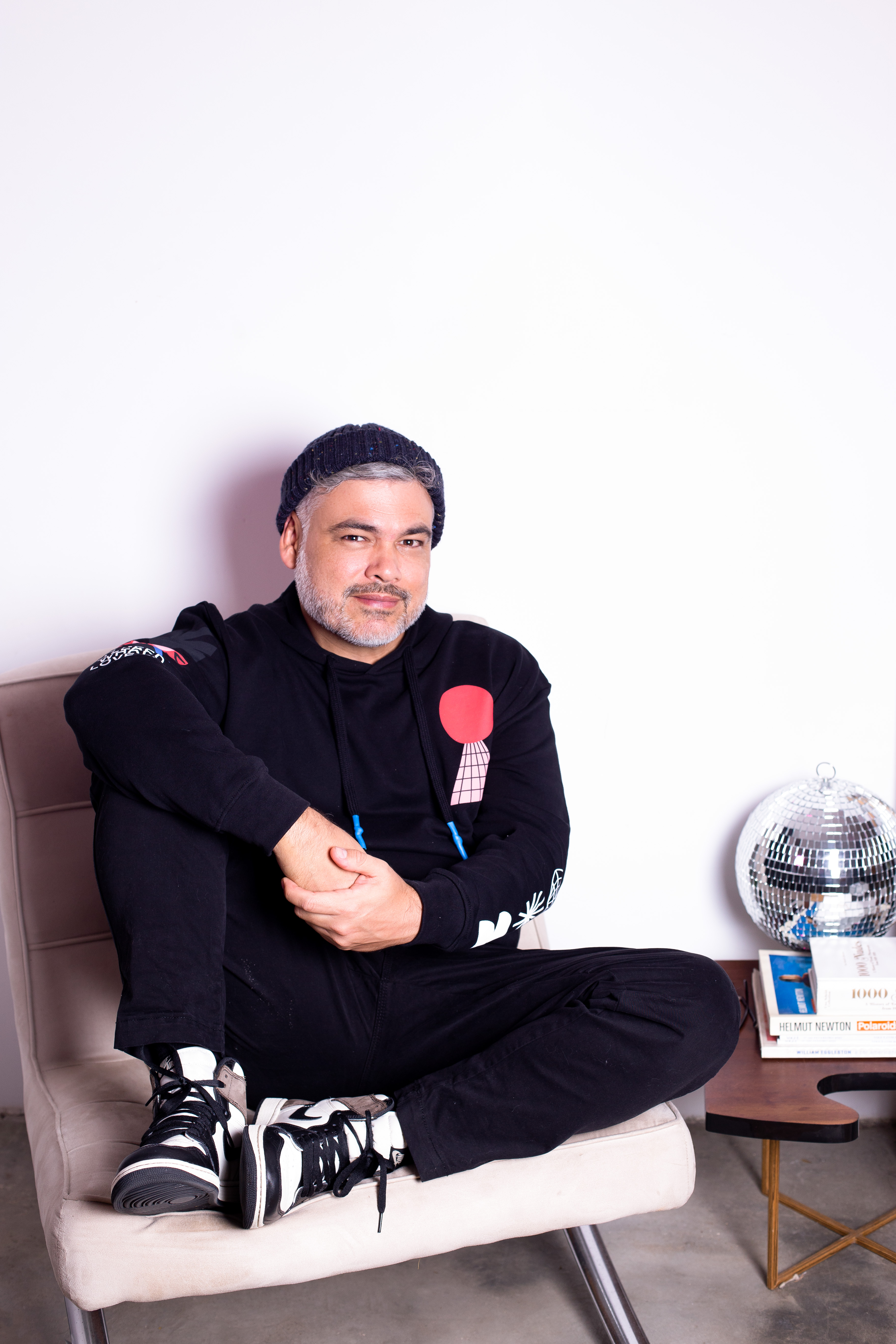
“Tempo” marks your first full-length album and comes at a moment where you look back on more than two decades in electronic music. What made now the right time to translate that personal journey into a full body of work?
I think there came a point when time itself started asking me for this ehehe. After 30 years of career, living through so many phases of the scene, so many dance floors and transformations, I felt there was a story that could only be told in an album, in a way that I would be happy with the whole construction. Actually I keep telling myself this, it's important to do what we enjoy and to give space for new possibilities. The album allowed me to look inward, revisit memories, bring together old influences with what I live today and mainly organize this trajectory in a more emotional way. Besides that, “Tempo” was born in a very real moment for me: a phase of maturity in general, of clarity about who I am and what I want to express musically, with lightness and purpose.
The album explores a wide spectrum of moods from dub-reggae influences in Time Goes to baile funk energy in Som na Caixa and jazzy house textures throughout. How did you approach blending these different rhythms, identities, and eras into one coherent narrative?
This blend is, in fact, who I am. My history as a DJ and producer has always been very marked by this openness. I grew up between house, jazz, disco, reggae, funk, rock… Being an artist is a lot about that, bringing diverse influences into your art, I can't see myself inside a single box. Within the album, I tried to bring this in a coherent way, starting from a simple principle: the narrative needed to respect the passage of time, both in a musical and personal sense.
So the tracks talk to each other like chapters. Some look to the past, others dialogue with the present and others point toward future paths. The connecting thread is the identity I built throughout my career: a warm, danceable, organic musicality. Even when the rhythms change, the feeling remains the same: it's Leo, telling his own story.
You’ve invited a diverse group of collaborators such as Jhayam, Jon Dixon, Nathan Flutebox Lee, Zopelar, Mona Lee, and From House To Disco. What was your process in choosing these voices, and how did each collaboration shape the direction of the tracks?
The collaborations came together very naturally. I invited people who in some way appeared along the way and whose work I already liked, people with whom I have exchange, respect and musical affinity. Each of them brought a world into the album: Jhayam brought the dub-reggae vibration that has always been with me. Nathan Flutebox Lee added that Carioca breath mixed with modernity, giving lightness and movement to the track. Jon Dixon, with the soul of Detroit, elevated “Redentor” to a spiritual place. Zopelar was essential for the dance floor energy of “Som na Caixa”, with his futuristic touch. Mona Lee brought emotion and ancestry to “Disco Raro”. From House To Disco arrived with the perfect naturalness for a light and positive track like “Easygoing”.
I think one of the cherries on top is the Intro, which will be a bonus for download streams. Gilberto Sorbini placed “Tempo” into a poem that describes what I sought to bring and gather in this album: the before, the after, the now. Looking at the final result, I believe I made the right choices. These artists didn’t just “participate” in the album, they helped connect the dots and deliver the right message. The album only exists the way it is because these voices were in it.
Rio, jazz, Detroit, disco, Jamaican sound system culture, the album feels like a dialogue between places and histories. Which of these environments or influences left the strongest imprint on “Tempo,” and how do they reflect where you are as an artist today?
Rio is my emotional base, it’s where I come from and where music has always been about gathering, mixing and freedom. This appears in the warmth, the groove, the way I understand the dance floor. Detroit represents a more spiritual side of my journey in house, the depth, the feeling. Jazz appears as this fluidity that has always enchanted me: improvisation, freedom and sophistication. And Jamaican sound system culture has always been part of my references, especially in the way it understands vibration, bass, the street and gathering.
It's an influence that shaped me as a listener and as a DJ, especially in the way I perceive energy and connection between music and audience. It’s been 30 years on the road, these influences are inside me, so it was natural that they all left marks on the album. Today, as an artist, I am exactly at this point: aware of my roots, in dialogue with the world, keeping my mind open and seeking new ways to express myself without losing the essence.
“Tempo” moves between introspection and dancefloor pressure, offering both softer moments and peak-time energy. How do you envision listeners engaging with the album? Is it meant to be explored as a journey from start to finish, or as a collection of tracks that speak to different moments and moods?
From the initial poem to the closing with “Avec Moi”, there is a thought-out flow, almost as if I were telling a story in a set, guiding through different phases and sensations. It is an album made to be listened to from beginning to end - it's like entering my head during this creation. At the same time, each track carries its own personality, it has a story. So, if someone wants to pick just one mood, the album also works. In the end, what I want most is for people to allow themselves to feel, without hurry, without expectation. This album is about time… so each person will experience it at their own pace.
Support the artist and buy the album here.