.svg)



Less Is More: Ten Records Behind the Sound of Low Volume
Some musical connections last a lifetime. For Low Volume, the story began in Pune in the late 1990s, when India's electronic music scene was still finding its feet and a close-knit community of DJs, record collectors and dance music enthusiasts were discovering new sounds together. Years later, life brought the duo together again in Germany, where a shared passion for music evolved into a project built on restraint, atmosphere and the space between sounds.
From the dub-inflected minimalism of Basic Channel and Maurizio to the emotional pull of trance, the immersive textures of ambient electronics and the weight of Burial's low end, the records that shaped Low Volume span far beyond any single genre. Some are tied to formative moments and lasting friendships; others changed the way they think about production, sound design and the power of simplicity.
With Aftertime, their new seven-track LP gathering ideas from fifteen years of jams, drafts and experiments, Low Volume continue to explore the delicate balance between memory and forward movement. Here, Pawas Gupta and Ambrish Yadav revisit ten records that helped shape their musical identities, sharing the stories, discoveries and lasting inspirations behind the sound they make today. Take It away Low Volume…
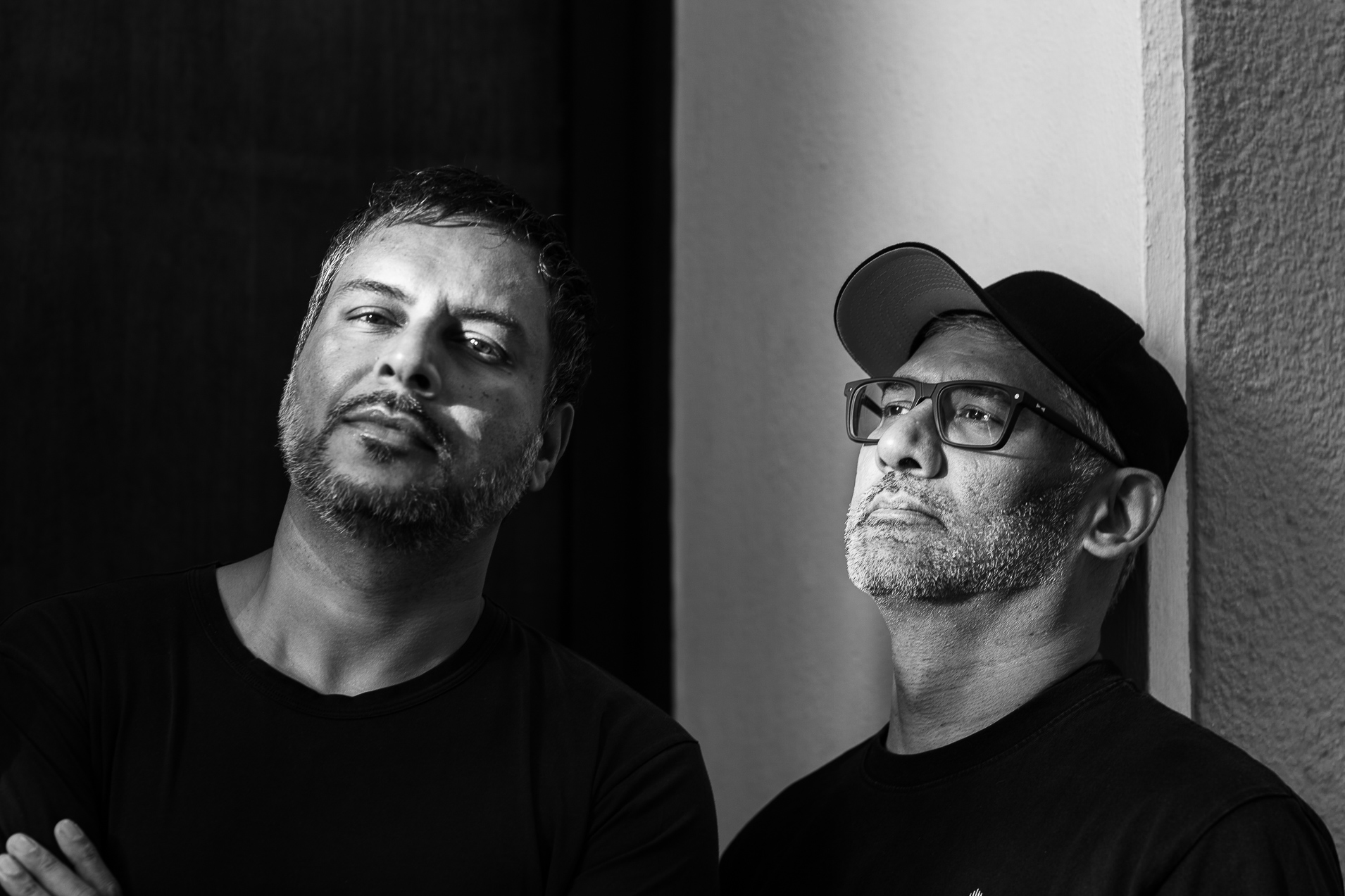
‘Although our musical journeys eventually took us from Pune to Germany, the foundation for Low Volume was built long before the project existed. We grew up during a time when electronic music was still finding its audience in India. In the mid-to-late 1990s, Pune's club scene was just beginning to emerge, and a small community of DJs, record collectors and dance music enthusiasts found themselves connected through a shared passion for discovering new sounds.
That's where our story began. Through DJing, record hunting, mixtape swaps and countless conversations about music, we discovered many of the artists who still inspire us today. Over the years, our tastes expanded far beyond house music, taking in techno, ambient, experimental electronics, drum & bass, trance, dub and everything in between. Despite the endless musical rabbit holes we've fallen into, we've rarely disagreed on what makes great music.
These ten records didn't just shape our individual tastes. They taught us about space, atmosphere, emotion, patience and simplicity. More importantly, they helped define the philosophy behind Low Volume and continue to influence the music we make today.’
1. Rhythm & Sound – See Mi Yah (Remixes)
Pawas Gupta
I still listen to this record at least two or three times a week. Some music loses its magic after repeated listens. This one never does.
Along with the rest of the Basic Channel catalogue, it had a massive influence on our sound. The texture, the negative space, the restraint and the confidence to leave things out rather than constantly add more are lessons that stayed with us. Every sound serves a purpose, and every silence matters just as much as the music itself.
Even after all these years, it still sounds futuristic. Records like this inspired us to create music in a similar spirit while trying to add our own perspective and touch.
2. Maurizio – M5
Pawas Gupta
Finding Basic Channel records wasn't easy back then. While living in Cologne, I would regularly visit Kompakt, hoping they'd have some back catalogue gems hidden away in the shelves. One day, I got lucky.
The M5 became one of those records that practically lived in my DJ bag. It accompanied me to countless gigs and listening sessions and has remained one of the most important references for how powerful minimal music can be.
The track doesn't demand attention. Instead, it slowly draws you in and creates an entire world from seemingly simple elements. That's something I've always admired and something that influences us as Low Volume.
3.Blaze Ft Sybil - When I Fall In Love (Antiloop Club Mix)
Pawas Gupta
In 2002, I visited Ambrish in Cologne for the first time and stayed with him for a few weeks. Looking back, that trip played a huge role in shaping our musical connection. Every morning seemed to start the same way: coffee, conversations about music, and this track playing through the speakers.
At the time, garage music was still very much in the air, and this record felt like the perfect bridge between house, garage and pop. It had groove, warmth and soul while still carrying enough dancefloor energy to keep things moving. We must have listened to it almost every day during my stay.
What makes this track special isn't just the music itself, but the memories attached to it. Whenever I hear it now, I'm instantly transported back to that apartment in Cologne, talking about records, sharing ideas and imagining the music we wanted to make one day. Looking back, you can probably hear subtle traces of those influences in some of our productions from that era and even in the way we think about melody and groove today.
4. Daso – Daybreak
Pawas Gupta
When this record came out in 2005, I had only recently met Daso. At the time, his debut release was being played by almost every major DJ, and his reputation was growing rapidly.
What amazed me wasn't just the music. It was how he made it.
I remember visiting his studio and expecting to see some sophisticated setup. Instead, there were tiny Edirol monitors, a well-used laptop and FL Studio. That was pretty much it.
The Cologne producers I met during those years really embodied the "less is more" philosophy. They focused entirely on ideas instead of equipment. Seeing world-class music emerge from such modest tools was genuinely life-changing. It changed how I thought about production forever and taught me that creativity will always matter more than gear.
5. Adam Kroll – Stalker
Pawas Gupta
Adam Kroll is the king of minimalism.
Through him, I met Daso and many of the collaborators who eventually became close friends. What always fascinated me was how little he needed to create extraordinary music. Logic Pro, Ableton, an M-Audio Oxygen 8 and a pair of Genelec 8030As were enough for him to produce records for labels like Traum and Cocoon.
One evening around 2006, he came over to Ambrish's tiny 19-square-metre apartment. Most of our production sessions happened there, often sitting under a bunk bed with cables running everywhere and equipment squeezed into every available corner.
Adam told us he had a new track coming out on a compilation. Then he pressed play on his MP3 player.
For a few minutes, nobody said a word.
When the track ended, all three of us were sitting there with goosebumps. It was one of those moments when you know you've heard something special. Nearly twenty years later, that feeling hasn't faded.
6. Three Drives – Greece 2000
Ambrish Yadav
Some tracks become part of your musical identity, and for me, Greece 2000 is one of them.
Growing up in Pune during the late 1990s, electronic music was still relatively underground. Information travelled slowly. You heard about records through DJs, mix CDs, cassette recordings and conversations with other music obsessives. When Greece 2000 arrived in 1997, it felt different from anything else around it.
I still remember hearing it for the first time and being completely captivated by its melody and emotion. It managed to be uplifting, euphoric and nostalgic all at once. Before that, I loved dance music. After hearing Greece 2000, I began falling in love with electronic music as an art form.
Over the years, it became the soundtrack to countless memories: DJ gigs, late-night drives, conversations with friends and endless listening sessions. Even today, the opening notes instantly transport me back to those formative years in Pune. That's why it meant so much when we eventually created our own edit for the Sound of Berlin compilation. In many ways, it was our way of paying tribute to one of the records that started the journey.
7. Bluetech – Sines and Singularities
Ambrish Yadav
This is one of those records that arrived in my life at exactly the right moment.
Despite being a long-time listener of ambient and downtempo music, I somehow missed this album for years. When I finally discovered it, I was completely stunned. I remember finishing the first listen and immediately starting it again from the beginning.
The album showed me how detailed and immersive electronic music could be without relying on obvious hooks or dancefloor structures. Every sound felt alive. Every texture seemed to have its own story.
Around the same time, I was becoming increasingly interested in sound design and eventually began exploring modular synthesis. Looking back, albums like this helped reshape the way I listened to music. Instead of focusing only on melodies and rhythms, I became fascinated by tone, space and atmosphere.
To this day, it remains one of my favourite albums for long studio sessions when I need inspiration or a reminder that subtlety can be just as powerful as intensity.
8. Burial – Fostercare
Ambrish Yadav
The first thing that hit me wasn't the melody or the atmosphere.
It was the bass.
I can still remember hearing Fostercare on a proper studio system and feeling the sub-bass physically move through the room. It wasn't just something you listened to. It was something you experienced.
For that reason alone, this became a studio-only track for me. I rarely listened to it on headphones or consumer speakers because I knew I wouldn't get the full experience. Every time it came on in the studio, whatever I was doing stopped for a few minutes.
As producers, we spend a lot of time thinking about frequencies, balance and sound design. Fostercare reminded me that low-end isn't merely technical. It can be deeply emotional. The track completely changed how I thought about bass and its ability to create atmosphere and tension.
Even now, just writing about it, I can almost feel those frequencies in my stomach.
9. Roy Of The Ravers – Emotinium '22
Ambrish Yadav
This is one of my all-time anthems.
The twenty-minute original demo is, in my opinion, a masterclass in how to build and sustain emotion. Most producers would be terrified of holding onto an idea for that long. Yet somehow, every minute feels necessary.
I discovered the track during a period when I was diving deeper into acid music and analogue sound design. As someone who has spent many years exploring synthesis and more recently modular systems, hearing a TB-303 used with such elegance and restraint was inspiring.
What fascinates me most is that the track never feels rushed. It takes its time and trusts the listener. That's a lesson that has stayed with me as a producer. Sometimes the most powerful thing you can do is let an idea breathe.
There are records I admire. Then there are records I can listen to every day for weeks without getting tired of them. Emotinium '22 belongs firmly in the second category.
10. Boards of Canada – Music Has the Right to Children
Ambrish Yadav
Choosing a single Boards of Canada release is almost impossible because I genuinely love their entire catalogue. But if I had to pick one, it would be Music Has the Right to Children.
This album has accompanied me through countless long drives over the years. There is something about being alone on an empty motorway, watching the landscape pass by while this record plays, that feels almost therapeutic.
What continues to amaze me is how the music manages to feel both simple and incredibly deep at the same time. Every listen reveals new details hiding beneath the surface. A melody tucked away in the background. A texture that somehow escaped my attention before. A subtle emotional shift that changes the mood of an entire track.
As a producer, it taught me that atmosphere can be every bit as important as melody. As a listener, it taught me that great records evolve with you over time.
I've probably listened to this album hundreds of times, and yet it still surprises me. Very few records can claim that.
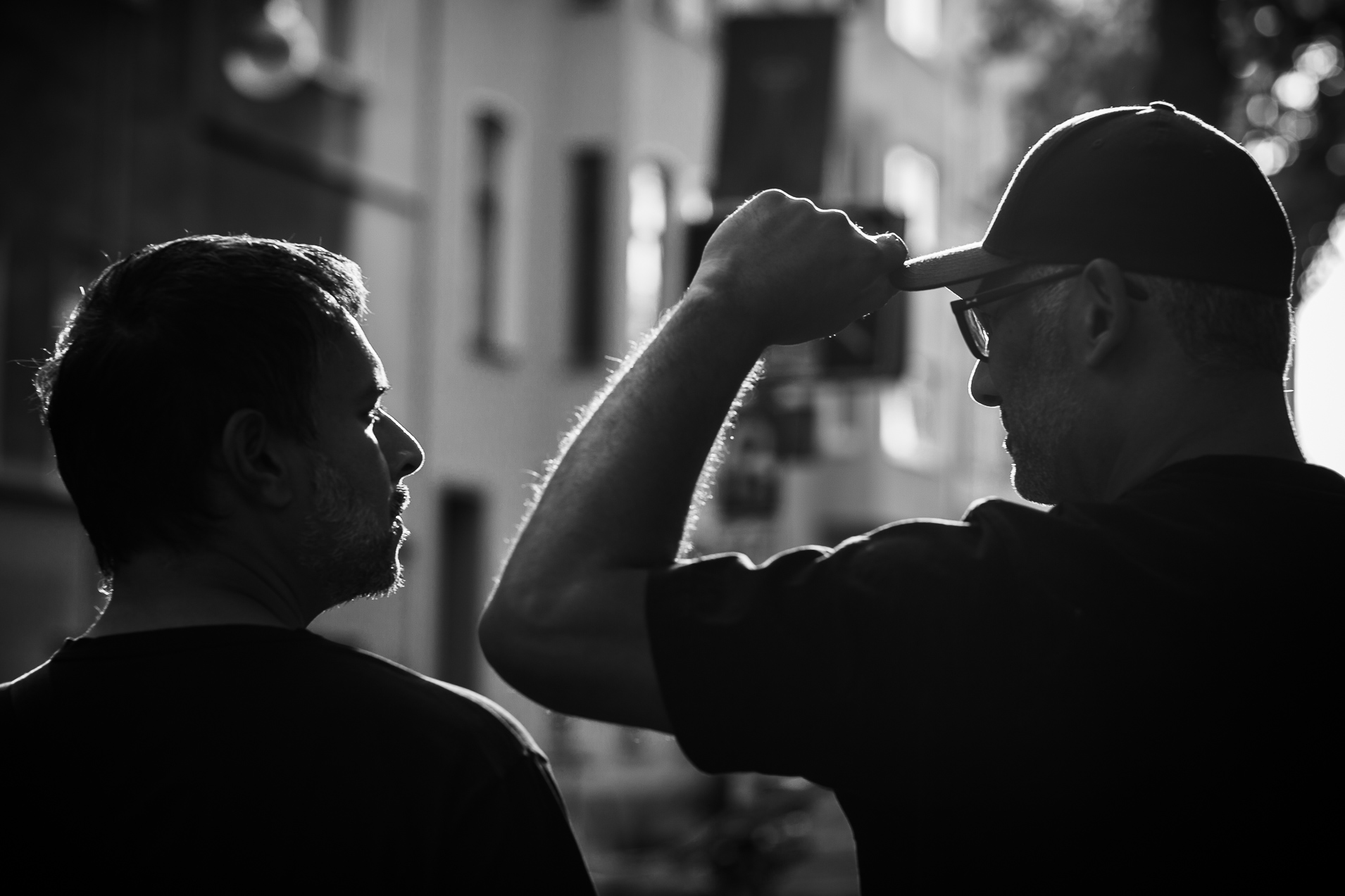
‘Looking across these ten records, a common theme emerges. None of them rely on excess. Whether it's the dub minimalism of Rhythm & Sound and Maurizio, the elegant restraint of Daso and Adam Kroll, the timeless emotion of Greece 2000, the immersive worlds of Bluetech and Boards of Canada, or the sonic depth of Burial and Roy Of The Ravers, they all prove that lasting impact comes from intention rather than complexity.
That's a philosophy we've carried into Low Volume from the very beginning, and one that remains at the heart of our latest release, Aftertime.’
BUY / STREAM AFTERTIME HERE